
präsentiert von

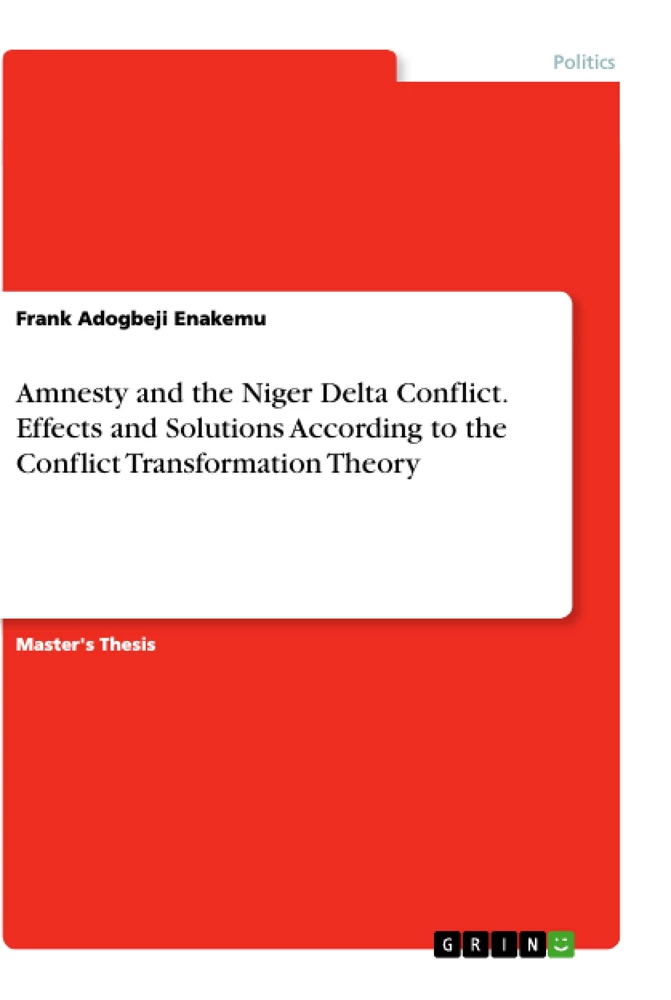
Table of Contents
1. CHAPTER ONE
2. INTRODUCTION
2.1 Background to the Study
2.2 1.2 Statement of the Problem
2.3 1.3 Aim and Objectives of the Study
2.4 1.4 Research Questions
2.5 1.5 Significance of the Study
2.6 1.6 Scope of the Study/Delimitation
2.7 1.7 Study Area
3. CHAPTER TWO
4. LITERATURE REVIEW
4.1 2.1 Theoretical Framework
4.2 2.2 Conceptual Framework
5. CHAPTER THREE
6. RESEARCH METHODOLOGY
6.1 3.1 Research Design
6.2 3.2 Population for the Study
6.3 3.3 Sampling and Sampling Techniques
6.4 3.4. Nature/Sources of Data
6.5 3.5 Method of Data Collection/Instrumentation
6.6 3.6 Method of Data Analysis
6.7 3.7 Validity/Reliability of Research Instrument
7. CHAPTER FOUR
8. RESULTS AND DISCUSSION
8.1 4.1. Presentation of Data
8.1.1 Table 4.2: Order of number of respondents that participation in the Focus Group Discussion FGD and In-depth Interview IDI
8.2 4.2 Data Analysis
8.3 4.3 Discussion of Findings
9. CHAPTER FIVE
10. SUMMARY, CONCLUSION AND RECOMMENDATIONS
10.1 5.1 Summary
10.2 5.2 Conclusion
10.3 Recommendations
10.4 Contributions to Knowledge
Research Objectives and Themes
The research examines the impact of the Federal Government’s 2009 Amnesty programme on the Niger Delta region. It aims to evaluate how this disarmament and reintegration initiative has influenced security, economic stability through oil production, and overall regional development.
- Impact of the 2009 Presidential Amnesty Programme on security.
- Analysis of oil pipeline vandalism and its effect on national revenue.
- The efficacy of the Disarmament, Demobilization, and Reintegration (DDR) model.
- Socio-economic development and infrastructure challenges in the Niger Delta.
Excerpt from the Book
Background to the Study
Niger Delta has been at the forefront of the Nigeria oil and gas discourse in recent years. The reason for this is the fact that the treasure base of the Nigerian State has been characterized by neglect, underdevelopment, deprivation and conflict in the midst of oil wealth. Nigeria, the most populated country in Africa, is undoubtedly one of the continent's most prosperous countries. It has enormous resources (human and material) that provide opportunities for national development (Oyakorotu, 2008). Unfortunately, since Crude oil was discovered in the Niger Delta area of Nigeria over fifty years ago, in Oloibiri by Shell Petroleum Development Company the region is still impoverished and underdeveloped (Aaron and George, 2010).
Given that oil has been the mainstay of the Nigerian economy, contributing over 90% of the government's earnings in foreign currency, it is surprising that the trajectory of constitutional development, socio-economic development and class formation has been massively impacted and dictated by oil politics (Owugah, 1999). Prior to the emergence of commercial oil production in the Niger Delta region in Nigeria in 1958, the area was essentially a pristine environment that supported significant living resources for the mostly sedentary population. The region accounted for a large proportion of Nigeria’s commercial fishing industry (Afinotan, 2009).
Since the discovery of oil, the state has claimed "ownership" and "controlled" resources. Very little of the benefits from the resources are ploughed back into the area that bears the environmental costs of oil production and are impoverished by it. Only a meagre 0.000007% of the value of the oil exported has been spent by oil companies for Community aid, while the state has spent less than 3% of the total oil revenue for the region's development (Rowell 1994). This is in contrast to
Summary of Chapters
CHAPTER ONE: This chapter introduces the Niger Delta conflict, the historical neglect of the region, and defines the research objectives and questions surrounding the 2009 Amnesty programme.
CHAPTER TWO: This section reviews existing literature, covering the theoretical framework of Conflict Transformation and the conceptual foundations of Amnesty and DDR.
CHAPTER THREE: This chapter outlines the research methodology, specifically the use of qualitative methods like In-Depth Interviews and Focus Group Discussions to gather data.
CHAPTER FOUR: This chapter presents the data gathered from participants, providing an analysis of the impact of the amnesty programme on security, oil production, and development.
CHAPTER FIVE: This concluding chapter summarizes the study's findings, provides a final conclusion on the effectiveness of the amnesty, and offers policy recommendations for the region.
Keywords
Amnesty, Niger Delta, Conflict Transformation, Security, Development, Oil Production, Pipeline Vandalism, Disarmament, Demobilization, Reintegration, Militancy, Resource Control, Governance, Socio-economic, Nigeria.
Frequently Asked Questions
What is the primary focus of this research?
The research evaluates the impact of the Federal Government’s 2009 Presidential Amnesty Programme on security and development in the Niger Delta region, with a specific focus on the incidence of oil pipeline vandalism.
What are the central themes of the work?
The core themes include the effectiveness of the disarmament process, the connection between militancy and resource control, the economic implications of oil infrastructure security, and the socio-economic challenges faced by the local population.
What is the primary research question?
The study seeks to answer whether the 2009 amnesty programme succeeded in ending the conflict, reducing pipeline vandalism, increasing oil exploration, and fostering sustainable development in the region.
Which scientific methodology is utilized?
The study uses a qualitative research approach, specifically the One Group Pre-test Design, incorporating data from In-Depth Interviews (IDI) and Focus Group Discussions (FGD) with various stakeholders in the Niger Delta.
What topics are covered in the main body of the work?
The main body covers the theoretical framework of Conflict Transformation, the historical context of the Niger Delta crisis, the structure of the Amnesty programme, data analysis of respondent views, and a discussion on why militancy and insecurity persisted despite the intervention.
Which keywords best characterize this study?
The study is characterized by keywords such as Amnesty, Niger Delta, Conflict Transformation, Security, Oil Production, and Pipeline Vandalism.
How does the author define the "Conflict Transformation" theory?
The author defines it as a process that requires more than a mere change in positions or win-win outcomes; it involves addressing the underlying structures, relationships, and societal constitutions that fuel violent conflict.
What does the study conclude about the success of the amnesty programme?
The study concludes that while the programme successfully reduced active militant combat and temporarily boosted oil production, it failed to address the root causes of the crisis, such as systemic underdevelopment and environmental degradation.
What specific recommendations does the researcher offer?
The researcher recommends restructuring the Nigerian governance system, increasing local derivation funds, holding oil companies accountable for regional development, and prioritizing the environmental clean-up of the Niger Delta.
Ende der Leseprobe aus 88 Seiten
- nach oben
- Arbeit zitieren
- Frank Adogbeji Enakemu (Autor:in), 2021, Amnesty and the Niger Delta Conflict. Effects and Solutions According to the Conflict Transformation Theory, München, Page::Imprint:: GRINVerlagOHG, https://www.diplomarbeiten24.de/document/1015089

neugierig - aktuell - relevant
Entdecken Sie hilfreiche Tipps und Tricks rund ums Studium!

Entdecken Sie hilfreiche Tipps und Tricks rund ums Studium!
Ihre Hausarbeit / Abschlussarbeit:

- - Publikation als E-Book und Buch
- - Hohes Honorar auf die Verkäufe
- - Für Sie komplett kostenlos - mit ISBN
- - Es dauert nur 5 Minuten
- - Jede Arbeit findet Leser

- © GRIN Publishing GmbH.
- Alle Inhalte urheberrechtlich geschützt. Kopieren und verbreiten untersagt.
- info@grin.com
- AGB
- Open Publishing
Der GRIN Verlag hat sich seit 1998 auf die Veröffentlichung akademischer eBooks und Bücher spezialisiert. Der GRIN Verlag steht damit als erstes Unternehmen für User Generated Quality Content. Die Verlagsseiten GRIN.com, Hausarbeiten.de und Diplomarbeiten24 bieten für Hochschullehrer, Absolventen und Studenten die ideale Plattform, wissenschaftliche Texte wie Hausarbeiten, Referate, Bachelorarbeiten, Masterarbeiten, Diplomarbeiten, Dissertationen und wissenschaftliche Aufsätze einem breiten Publikum zu präsentieren.
Kostenfreie Veröffentlichung: Hausarbeit, Bachelorarbeit, Diplomarbeit, Dissertation, Masterarbeit, Interpretation oder Referat jetzt veröffentlichen!
Folgen Sie GRIN auf


- GRIN Verlag GmbH
-
- Nymphenburger Str. 86
- 80636
- Munich, Deutschland
- +49 89-550559-0
- +49 89-550559-10
- info@grin.com
-
