
präsentiert von

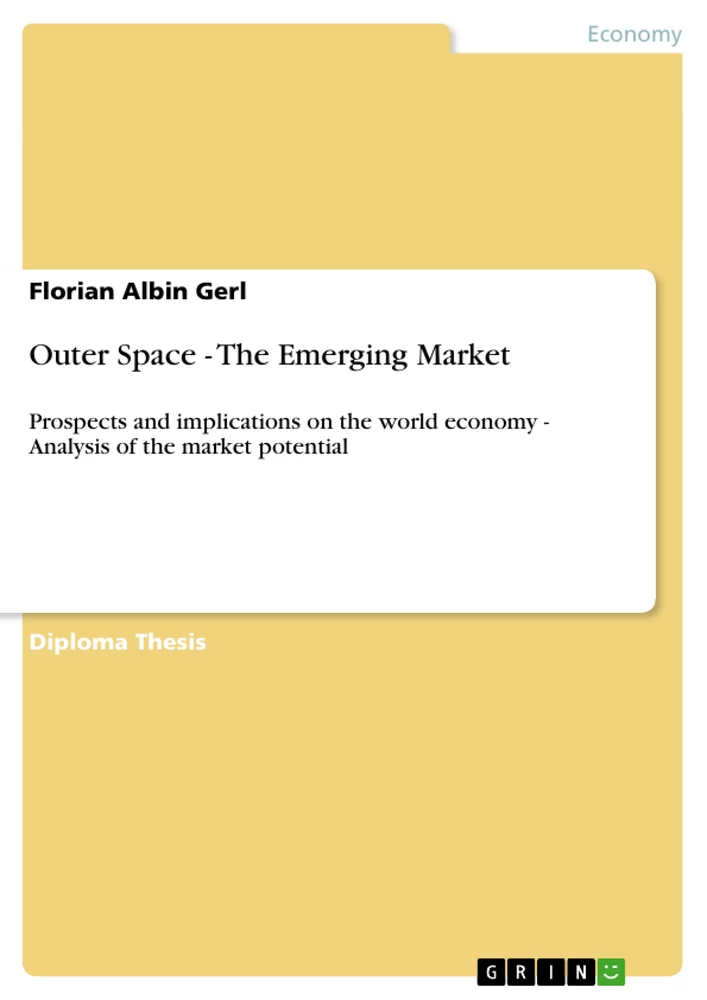
Table of Contents
1. INTRODUCTION
1.1. Purpose
1.2. Overview
1.3. Methodology
1.4. Background
1.4.1. Orbits
1.4.1.1. Low Earth Orbit (LEO)
1.4.1.2. Medium Earth Orbit (MEO)
1.4.1.3. Highly Elliptical Orbit (HEO)
1.4.1.4. Geostationary Earth Orbit (GEO)
1.4.2. Benefits of Space exploration and space research for everyone
2. INTERNATIONAL LEGAL, AND INSTITUTIONAL FRAMEWORK
2.1. United Nations
2.1.1. COPUOS
2.1.2. UNOOSA
2.1.3. International Telecommunications Union
2.1.4. Other UN Organisations
2.1.4.1. The International Atomic Energy Agency
2.1.4.2. Food and Agriculture Organization
2.1.4.3. International Civil Aviation Organisation
2.1.4.4. World Health Organization
2.1.4.5. World Meteorological Organisation, WMO
2.2. Space Law
2.2.1. Treaties
2.2.1.1. The outer space treaty
2.2.1.2. The Rescue Agreement, 1968
2.2.1.3. The Liability Convention, 1972
2.2.1.4. The Registration Convention, 1976
2.2.1.5. The Moon Treaty, 1979
2.2.2. Resolutions
2.2.3. Criticism
3. INSTITUTIONAL AND SCIENTIFIC USE OF OUTER SPACE
3.1. Intergovernmental Organisations
3.1.1. INTELSAT
3.1.2. EUMETSAT
3.1.3. INTERSPUTNIK
3.1.4. EUTELSAT
3.1.5. INMARSAT
3.1.6. ARABSAT
3.2. Space Faring Nations / National Organisations
3.2.1. The United States of America
3.2.2. The European Union (EU)
3.2.3. Russia
3.2.4. Japan
3.2.5. India
3.2.6. China
3.2.7. International Cooperation
3.2.7.1. International Space Station (ISS)
4. MILITARISATION OF SPACE
4.1. United States of America
4.2. Russia
4.3. Europe
4.3.1. Germany
4.3.2. France
4.3.3. Great Britain
4.3.4. Italy
4.4. China
4.5. Israel
4.6. India
4.7. Japan
4.8. South Korea
4.9. Rest of the World
4.10. Summary and Outlook
5. SPACE INDUSTRY AND COMMERCIAL USE OF OUTER SPACE
5.1. Institutional Market vs. Commercial Market
5.2. The Satellite Industry
5.2.1. Satellite Manufacturing
5.2.2. Launch Industry
5.2.2.1. Cheaper launches
5.2.3. Downstream / Satellite Services
5.2.3.1. Telecommunications & Direct Broadcast Services (DBS)
5.2.3.2. Location and Navigation
5.2.3.3. Earth Observation (EO)
5.2.4. Prospects of the satellite market
5.2.4.1. Microsatellites
5.2.5. Ground Equipment
5.3. Space Tourism
5.4. Prospects / Future Space Applications
5.4.1. Private Investors and Trusts
5.4.2. Space Cargo
5.4.3. Space Advertising and Sponsorship
5.4.4. Asteroid Mining
5.4.5. Commercial Satellite Servicing in Space
5.4.6. Space Lift
5.4.7. Mining on the moon
6. CONCLUSION
Research Objectives & Topics
This thesis aims to analyze the re-emergence of space's significance in international politics, military strategy, and the global economy, specifically evaluating the market potential of the outer space sector and identifying future applications.
- The evolution and commercialization of the global space market.
- The legal and institutional framework governing outer space activities.
- The militarization of space and the growth of national military space programs.
- The satellite industry, encompassing manufacturing, launch services, and downstream satellite applications.
- Emerging trends in space tourism and potential future ventures such as lunar mining.
Excerpt from the Book
1.4.1.1. Low Earth Orbit (LEO)
The Low Earth Orbit is a circular or elliptical orbit at an altitude of up to 2000 km. Due to the proximity to Earth and the subsequent pull attributable to gravity objects in LEO must travel at a speed of around 7000m/s which leads to a time of circulation of 90 minutes to two hours. Since it requires less energy to place a satellite into a LEO then any other orbit, and LEO satellites need less powerful amplifiers for successful transmission, LEO is used for many applications. Because these LEO orbits are not geostationary, communication satellites require a network (or "constellation") of satellites to provide continuous coverage. Remote sensing satellites normally use lower orbits because of the added detail that can be gained. Therefore most military surveillance satellites and civil Earth observation satellites like weather satellites are launched to LEO.
The most famous artificial object in the LEO is the International Space Station (ISS).
Summary of Chapters
1. INTRODUCTION: Outlines the purpose of the thesis, research questions, and provides a brief overview of the historical context of space exploration.
2. INTERNATIONAL LEGAL, AND INSTITUTIONAL FRAMEWORK: Examines the various UN bodies and the existing international treaties that regulate the peaceful use of outer space.
3. INSTITUTIONAL AND SCIENTIFIC USE OF OUTER SPACE: Details the roles of intergovernmental organizations and the space programs of key nations like the U.S., EU, Russia, and China.
4. MILITARISATION OF SPACE: Analyzes the increasing reliance on space-based assets for military objectives and the associated geopolitical implications.
5. SPACE INDUSTRY AND COMMERCIAL USE OF OUTER SPACE: Provides a comprehensive market analysis of the satellite industry, launch services, space tourism, and future lunar applications.
6. CONCLUSION: Synthesizes the findings of the research to answer the initial research questions and provides an outlook on the future of the space sector.
Keywords
Outer Space, Space Economy, Satellite Industry, LEO, GEO, Militarization of Space, Space Tourism, International Space Law, Space Exploration, Space Policy, Satellite Manufacturing, Launch Services, NASA, ESA, Lunar Mining
Frequently Asked Questions
What is the primary focus of this thesis?
The thesis focuses on the commercial and geopolitical potential of the outer space sector, exploring how traditional institutional activities are complemented by a rising private and commercial market.
What are the central themes of the work?
Key themes include the legal framework of space, the growing militarization of the space environment, the technical and economic segments of the satellite industry, and emerging future space applications.
What is the main objective or research question?
The work aims to prove the re-emergence of space's significance in international politics and the global economy, and to analyze the potential of this emerging market while identifying key future growth areas.
Which scientific methods are employed?
The author utilized an extensive review of trade publications, industry reports from space agencies, academic research databases, and conducted first-hand expert interviews to gather primary insights.
What topics are discussed in the main part of the thesis?
The main part analyzes the various sectors of the space industry, including manufacturing, launch services, and downstream satellite services, alongside an in-depth discussion on potential future applications like space tourism and lunar mining.
Which keywords best characterize the work?
Relevant keywords include: Space Economy, Satellite Industry, Militarization of Space, Space Tourism, and International Space Policy.
How does the author categorize different satellite orbits?
The work classifies satellite orbits into four categories: Low Earth Orbit (LEO), Medium Earth Orbit (MEO), Highly Elliptical Orbit (HEO), and Geostationary Earth Orbit (GEO), detailing their specific utilities.
What impact does the "space race" have on current military strategies?
The work explains that space has become critical for modern military operations, citing the increasing reliance on satellites for communication, surveillance, navigation, and early warning systems.
Ende der Leseprobe aus 163 Seiten
- nach oben
- Arbeit zitieren
- Mag.(FH) Florian Albin Gerl (Autor:in), 2008, Outer Space - The Emerging Market , München, Page::Imprint:: GRINVerlagOHG, https://www.diplomarbeiten24.de/document/116794

neugierig - aktuell - relevant
Entdecken Sie hilfreiche Tipps und Tricks rund ums Studium!

Entdecken Sie hilfreiche Tipps und Tricks rund ums Studium!
Ihre Hausarbeit / Abschlussarbeit:

- - Publikation als E-Book und Buch
- - Hohes Honorar auf die Verkäufe
- - Für Sie komplett kostenlos - mit ISBN
- - Es dauert nur 5 Minuten
- - Jede Arbeit findet Leser

- © GRIN Publishing GmbH.
- Alle Inhalte urheberrechtlich geschützt. Kopieren und verbreiten untersagt.
- info@grin.com
- AGB
- Open Publishing
Der GRIN Verlag hat sich seit 1998 auf die Veröffentlichung akademischer eBooks und Bücher spezialisiert. Der GRIN Verlag steht damit als erstes Unternehmen für User Generated Quality Content. Die Verlagsseiten GRIN.com, Hausarbeiten.de und Diplomarbeiten24 bieten für Hochschullehrer, Absolventen und Studenten die ideale Plattform, wissenschaftliche Texte wie Hausarbeiten, Referate, Bachelorarbeiten, Masterarbeiten, Diplomarbeiten, Dissertationen und wissenschaftliche Aufsätze einem breiten Publikum zu präsentieren.
Kostenfreie Veröffentlichung: Hausarbeit, Bachelorarbeit, Diplomarbeit, Dissertation, Masterarbeit, Interpretation oder Referat jetzt veröffentlichen!
Folgen Sie GRIN auf


- GRIN Verlag GmbH
-
- Nymphenburger Str. 86
- 80636
- Munich, Deutschland
- +49 89-550559-0
- +49 89-550559-10
- info@grin.com
-
