
präsentiert von

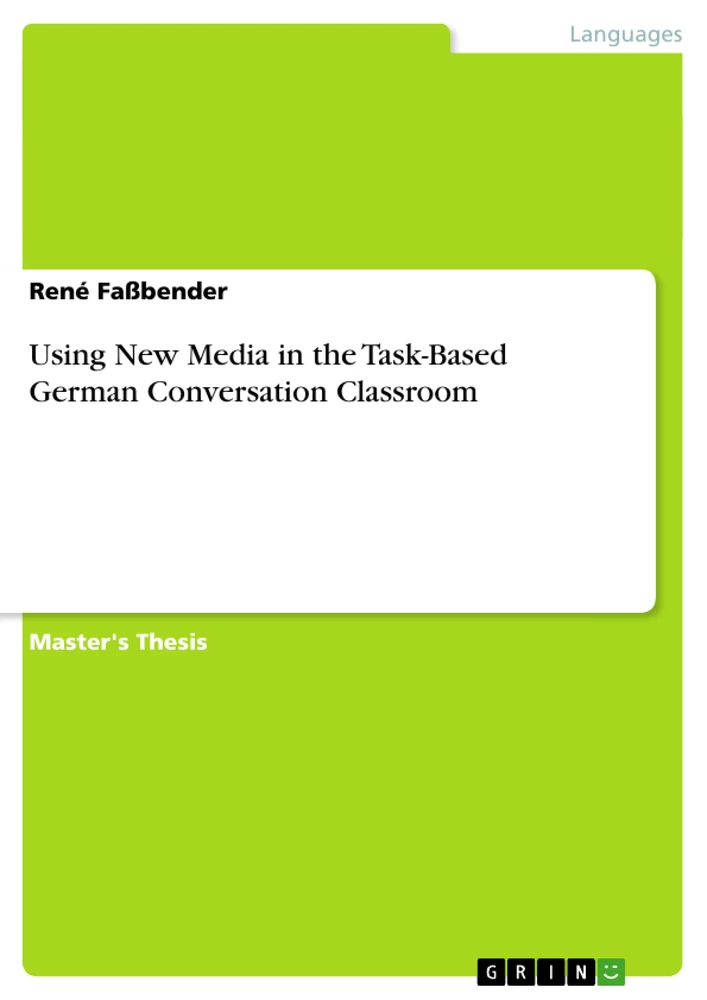
Table of Contents
I. Introduction
Background of the Topic
Statement of the Problem
Purpose of the study
Definition of Terms
II. Review of the Literature
Movies in the SL Classroom
What Makes Movies Useful for SL Teaching
Video Material as a Window to the Target Culture
The Value of Video Material for SL Acquisition
Movies and Student Motivation
How Can Movies be Used in the Classroom?
Useful Standards and Teaching Approaches
Conclusion
III. Method
Implications
Set of Criteria
IV. Application
I. Tor des Monats (Goal of the Month)
Pre-viewing Phase
Viewing Phase
Post-viewing Phase
Application of Criteria
II. Ein Bewerbungsgespräch (A Job Interview)
Pre-viewing Phase
Viewing Phase
Post-viewing Phase
Application of Criteria
III. Umweltbewusstsein (Environmental Awareness)
Pre-viewing Phase
Viewing Phase
Post-viewing Phase
Application of Criteria
V. Discussion
Objectives and Core Themes
This study aims to demonstrate how new media, specifically platforms like YouTube, can be integrated with task-based teaching approaches to improve communicative competence and cultural awareness in advanced German conversation classes.
- Integration of authentic audiovisual media into language curricula.
- Application of task-based teaching principles to foster student-centered learning.
- Development of criteria for evaluating and selecting effective video materials.
- Enhancement of students' cultural understanding and communicative proficiency.
Excerpt from the Book
How Can Movies Be Used in the Classroom?
A teacher’s job does not start with showing the movie. Although most films of the target culture can feature useful aspects, the selection process should not be an arbitrary one. Some of Palomo’s (1940) criteria for pedagogic films are also applicable to today’s materials and still retain their value. The linguistic contents must not deviate too extremely from standard usage. Also, the movie should preferably “deal with the foreign scene, depicting the people whose language is being studied, especially in those of their daily activities which have their counterpart in the student’s own environment” (p. 286).
Once good video material, which is both appealing to the students and rich in cultural elements, has been selected, careful preparation on both the teacher’s and the students’ side is essential: “Both the entertainment and instructional potential of a movie are diminished when we show it to an unprepared class with the vague expectation of stimulating discussion afterwards” (Carr & Duncan, 1987, p. 92). Only careful preparation and awareness of the teaching objectives can assure an effective integration of the video material within the subject matter of a language class (Johnson, 1956).
Summary of Chapters
I. Introduction: This chapter outlines the background and problem statement regarding the use of new media in the classroom, defining key terms and the study's purpose.
II. Review of the Literature: This chapter explores the historical context and pedagogical benefits of using movies in second language teaching, including student motivation and the role of video as a cultural window.
III. Method: This chapter establishes a set of research-based criteria for selecting and using authentic video materials to develop effective communicative and task-based activities.
IV. Application: This chapter provides three concrete instructional units for an advanced German conversation class that incorporate authentic YouTube video segments.
V. Discussion: This chapter synthesizes the study's findings, highlighting the efficacy of combining new media with task-based approaches while noting current limitations and future research directions.
Keywords
Second Language Acquisition, Task-Based Language Teaching, Audiovisual Media, YouTube, Communicative Competence, Cultural Awareness, German Conversation, Authentic Filmic Texts, Student-Centered Learning, Language Pedagogy, Video Units, Educational Technology.
Frequently Asked Questions
What is the fundamental focus of this study?
The study investigates how teachers can effectively integrate modern audiovisual media, such as YouTube, into task-based instructional frameworks to improve communicative skills in advanced second language learners.
What are the primary themes addressed?
Key themes include the pedagogical utility of authentic video, the importance of student-centered communicative tasks, the role of culture in language learning, and the challenges teachers face when adopting new technologies.
What is the primary research goal?
The goal is to generate a specific set of criteria that instructors can use to select and implement authentic video segments in a way that maximizes student participation and communicative practice.
Which methodology is utilized?
The study uses a descriptive approach, reviewing existing pedagogical literature to define criteria and then applying these criteria to design three practical sample units for a German conversation classroom.
What does the main body of the work cover?
The main body examines historical research on media in language teaching, justifies the need for instructor-led guidance when using video, and details how to structure units through pre-viewing, viewing, and post-viewing phases.
Which keywords best characterize this work?
The work is characterized by terms such as Task-Based Language Teaching, Communicative Competence, Authentic Filmic Texts, and Educational Technology integration.
How does this study suggest maximizing the learning experience with video?
It emphasizes shifting the focus from "what" students watch to "how" they watch, advocating for active, guided participation rather than passive viewing.
How are the sample units structured in this research?
The units are structured using a consistent pedagogical model involving three phases: pre-viewing to prepare context, viewing for focused observation, and post-viewing for communicative analysis and task completion.
Ende der Leseprobe aus 137 Seiten
- nach oben
- Arbeit zitieren
- René Faßbender (Autor:in), 2008, Using New Media in the Task-Based German Conversation Classroom, München, Page::Imprint:: GRINVerlagOHG, https://www.diplomarbeiten24.de/document/124519

neugierig - aktuell - relevant
Entdecken Sie hilfreiche Tipps und Tricks rund ums Studium!

Entdecken Sie hilfreiche Tipps und Tricks rund ums Studium!
Ihre Hausarbeit / Abschlussarbeit:

- - Publikation als E-Book und Buch
- - Hohes Honorar auf die Verkäufe
- - Für Sie komplett kostenlos - mit ISBN
- - Es dauert nur 5 Minuten
- - Jede Arbeit findet Leser

- © GRIN Publishing GmbH.
- Alle Inhalte urheberrechtlich geschützt. Kopieren und verbreiten untersagt.
- info@grin.com
- AGB
- Open Publishing
Der GRIN Verlag hat sich seit 1998 auf die Veröffentlichung akademischer eBooks und Bücher spezialisiert. Der GRIN Verlag steht damit als erstes Unternehmen für User Generated Quality Content. Die Verlagsseiten GRIN.com, Hausarbeiten.de und Diplomarbeiten24 bieten für Hochschullehrer, Absolventen und Studenten die ideale Plattform, wissenschaftliche Texte wie Hausarbeiten, Referate, Bachelorarbeiten, Masterarbeiten, Diplomarbeiten, Dissertationen und wissenschaftliche Aufsätze einem breiten Publikum zu präsentieren.
Kostenfreie Veröffentlichung: Hausarbeit, Bachelorarbeit, Diplomarbeit, Dissertation, Masterarbeit, Interpretation oder Referat jetzt veröffentlichen!
Folgen Sie GRIN auf


- GRIN Verlag GmbH
-
- Nymphenburger Str. 86
- 80636
- Munich, Deutschland
- +49 89-550559-0
- +49 89-550559-10
- info@grin.com
-
