
präsentiert von

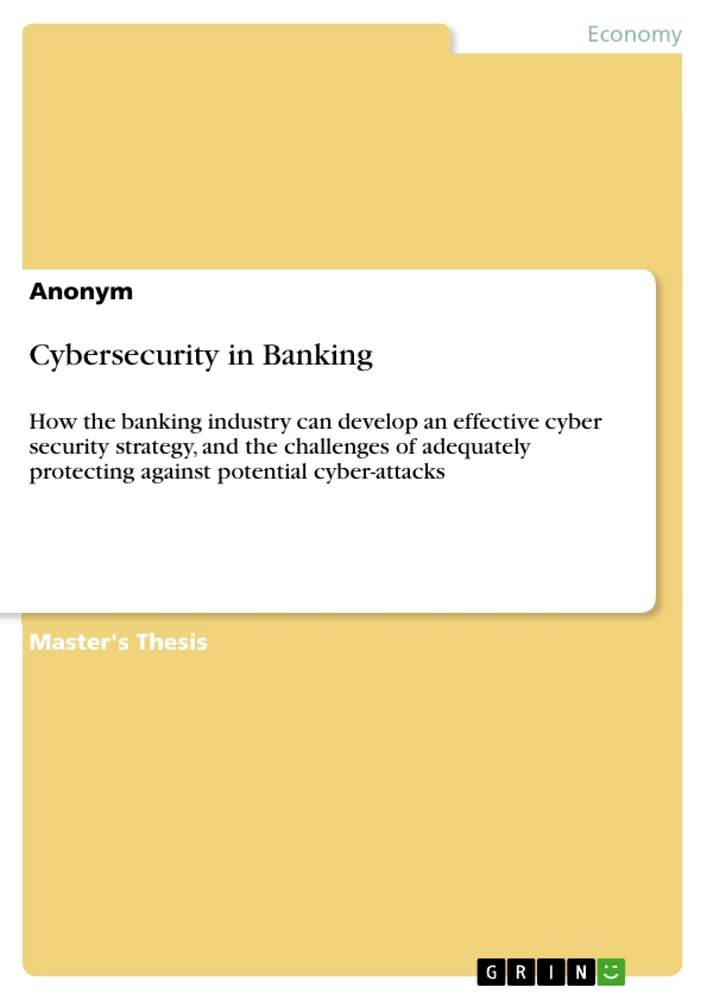
Table of Contents
1. Introduction
1.1 Background to the Study
1.2 Statement of the Problem
1.3 Research Objectives
1.4 Research Questions:
1.5 Significance of the study
1.6 Definition of Terms
2. Literature Review
2.1 Cybersecurity Threats
2.2 ICT Security Threats in Electronic Transactions
2.3 Cybersecurity Best Practices
2.4 Literature Gaps and Summary
3. Research Methodology
3.1 Research Problem and Setting
3.2 Research Design
3.3 Population and Sampling
3.4 Data Collection
3.5 Validity and Reliability of Research Instruments
3.6 Data Analysis
4. Research Significance
4.1 Why Is It Important To Study Cyber-Security?
5. Results
5.1 Threats and Vulnerabilities Increase Banks’ Risk Exposure
5.2 The Importance of Cybersecurity
5.3 Existence of Information Security Policy
5.4 Training Of the Banks’ Staff on Information Security
5.5 Intrusion Detection System
6. Discussion
7. Conclusions
7.1 Summary of Findings
7.2 Conclusion
7.3 Recommendations
7.4 Limitation of the study
7.5 Suggestions for Further Research
Project Goals and Themes
This research aims to analyze the security landscape of electronic banking transactions by identifying key cyber threats, exploring influencing factors, and proposing a robust cybersecurity model to help banking institutions better safeguard their assets and customer data.
- Analysis of prevalent ICT security threats in cyberspace.
- Evaluation of internal and external factors influencing vulnerabilities in the banking sector.
- Development of a comprehensive cybersecurity framework for electronic payments.
- Investigation of the role of employee training and security policies in risk mitigation.
- Assessment of the impact of third-party service providers on banking infrastructure security.
Excerpt from the Book
Cybersecurity Threats
Information technology security entails safeguarding data and information systems against unauthorised access, use, disclosure, disruption, modification, and destruction in order to ensure availability, integrity, and confidentiality (AlGhamdi, Win, & Vlahu Gjorgievska, 2020).Customers’ search for convenience has led to the massive evolution of electronic transactions as banks strive to cope with the increasing customer demand. With this dynamic evolution, banks are now hugely exposed to various threats as they grow in sophistication. Akhtar, Sheorey, and Bhattacharya (2021) indicated that banking systems are becoming vulnerable to attacks from all over the world. The threats to banking systems range from infiltrations of their infrastructure to data breaches and spear phishing. Online threats vary, and they target any organization, large or small. In this regard, a "cyber-security threat" can be defined as any malicious act seeking to steal, damage, or disrupt data or the digital life of the organisation (Ferdousi, 2020). The most common examples of cyberattacks include denial-of-service (DoS) attacks, data breaches, and computer viruses or malware.
Summary of Chapters
1. Introduction: Provides an overview of ICT in banking and defines the research problem, objectives, and significance regarding the need for better security strategies.
2. Literature Review: Synthesizes existing literature on cyber threats, vulnerabilities in electronic banking, and industry-standard best practices for information security.
3. Research Methodology: Details the descriptive research design, sampling techniques, and data collection methods involving secondary data and interviews with banking professionals.
4. Research Significance: Discusses the necessity of robust cybersecurity programs for protecting sensitive data and maintaining organizational resilience against sophisticated criminal tactics.
5. Results: Presents empirical findings regarding the common security challenges, the importance of security training, and the presence of intrusion detection systems in banks.
6. Discussion: Analyzes the gathered data in the context of current banking practices, highlighting how internal and third-party factors contribute to overall risk profiles.
7. Conclusions: Summarizes research findings, offers recommendations to enhance banking security, and suggests directions for future academic study in this field.
Key Keywords
Cybersecurity, Banking, Electronic Transactions, Cyber-attacks, Malware, Information Security, Data Breach, Risk Management, Digital Fraud, Phishing, Authentication, Intrusion Detection, Banking Infrastructure, ICT Security, Cyber Espionage.
Frequently Asked Questions
What is the primary focus of this research project?
The project focuses on the cybersecurity landscape within the banking industry, specifically addressing the risks and vulnerabilities inherent in modern electronic transaction platforms.
What are the key themes being investigated?
Key themes include the assessment of security threats, the influence of internal and external factors on bank vulnerabilities, and the development of effective cyber-defense models.
What is the main research objective?
The primary objective is to evaluate current ICT security threats and design a comprehensive cybersecurity model for the safe adoption of electronic transactions by financial institutions.
Which research methodology was adopted?
The study utilized a descriptive research design, combining secondary data analysis from industry reports with primary data gathered via interviews and questionnaires.
What topics are covered in the main body of the work?
The work covers theoretical literature, research methodology, findings from bank employee surveys, and a critical discussion of risks such as insider threats, malware, and social engineering.
How can the key findings be summarized?
The findings indicate that while banks have made improvements in security, human factors like lack of awareness, inadequate technical skills, and reliance on vulnerable third-party services remain significant challenges.
How do third-party vendors impact banking security?
The research notes that while third-party vendors provide essential services like cloud and web applications, they also introduce cyber risks by creating entry points that sit outside the bank's direct security controls.
What role does employee training play according to the results?
Employee training is identified as a critical pillar. The research found that many security flaws originate from inside the organization, making staff education on phishing and password hygiene vital for risk mitigation.
Ende der Leseprobe aus 37 Seiten
- nach oben
- Arbeit zitieren
- Anonym (Autor:in), 2022, Cybersecurity in Banking, München, Page::Imprint:: GRINVerlagOHG, https://www.diplomarbeiten24.de/document/1305834

neugierig - aktuell - relevant
Entdecken Sie hilfreiche Tipps und Tricks rund ums Studium!

Entdecken Sie hilfreiche Tipps und Tricks rund ums Studium!
Ihre Hausarbeit / Abschlussarbeit:

- - Publikation als E-Book und Buch
- - Hohes Honorar auf die Verkäufe
- - Für Sie komplett kostenlos - mit ISBN
- - Es dauert nur 5 Minuten
- - Jede Arbeit findet Leser

- © GRIN Publishing GmbH.
- Alle Inhalte urheberrechtlich geschützt. Kopieren und verbreiten untersagt.
- info@grin.com
- AGB
- Open Publishing
Der GRIN Verlag hat sich seit 1998 auf die Veröffentlichung akademischer eBooks und Bücher spezialisiert. Der GRIN Verlag steht damit als erstes Unternehmen für User Generated Quality Content. Die Verlagsseiten GRIN.com, Hausarbeiten.de und Diplomarbeiten24 bieten für Hochschullehrer, Absolventen und Studenten die ideale Plattform, wissenschaftliche Texte wie Hausarbeiten, Referate, Bachelorarbeiten, Masterarbeiten, Diplomarbeiten, Dissertationen und wissenschaftliche Aufsätze einem breiten Publikum zu präsentieren.
Kostenfreie Veröffentlichung: Hausarbeit, Bachelorarbeit, Diplomarbeit, Dissertation, Masterarbeit, Interpretation oder Referat jetzt veröffentlichen!
Folgen Sie GRIN auf


- GRIN Verlag GmbH
-
- Nymphenburger Str. 86
- 80636
- Munich, Deutschland
- +49 89-550559-0
- +49 89-550559-10
- info@grin.com
-
