
präsentiert von

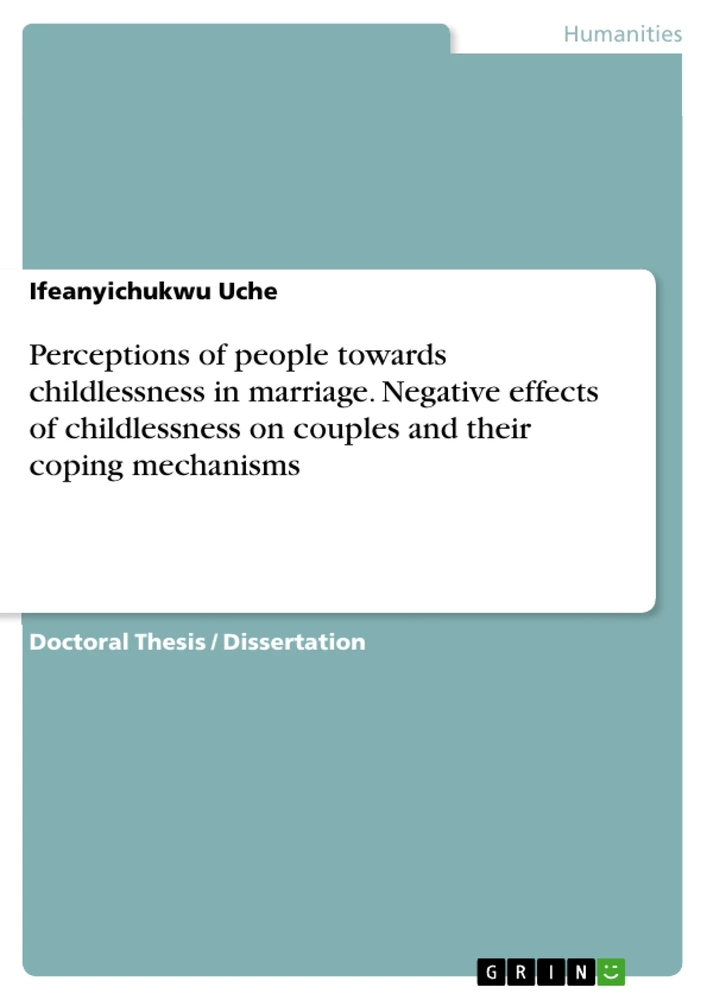
Table of Contents
1. Introduction
1.1 Background to the Study
1.2 Statement of the Problem
1.3 Aim and Objectives
1.4 Research Questions
1.5 Significance of the Study
1.6 Scope of the Study
1.7 Limitation of the Study
1.8 Definition of Operational Key Terms
1.9 Dissertation Outline
2. Literature Review
2.1 Overview
2.2 Theoretical Framework
2.2.1 Labeling Theory
2.2.2 Bio Psychosocial Theory
2.2.3 Feminist Theory
2.3 Definition Childlessness
2.4 Incidence of Infertility in Developing Nations
2.5 Factors Contributing to Infertility in Individuals
2.5.1 Ovulation Disorder
2.5.2 Issue Related to the Fallopian Tubes
2.5.3 Issue Related to Male Partner
2.5.4 Age Related Issue
2.5.5 Cervical/Uterine Related Issue
2.5.6 Abnormalities in Gene
2.5.7 Tobacco Consumption
2.5.8 Deviant Body Weight
2.6 Perceptions toward Infertility
2.7 The Sociocultural Implications of Infertility
2.8 Coping Mechanisms for Infertility
3. Research Methodology
3.1 Overview
3.2 Research Approach
3.3 Research Design
3.4 Study Population
3.5 Sample and Sampling Techniques
3.6 Data Collection Instrument
3.7 Validity of the Instrument
3.8 Reliability of the Instrument
3.9 Procedure for Data Collection
3.10 Data Analysis
3.11 Ethical Consideration
4. Results and Discussion
4.1 Overview
4.2 Socio-Demographic Characteristics of Participants
4.3 Perceptions of Peoples Towards Couple’s Childlessness in Marriage
4.4 Negative effect of Childlessness
4.5 Coping Mechanisms Adopted by Couples Towards Childlessness
5. Summary of Findings, Conclusion and Recommendations
5.1 Overview
5.2 Summary of Research Findings
5.2.1 Perceptions of peoples towards couple’s childlessness in marriage
5.2.2 Negative effect of childlessness on couples who do not have children
5.2.3 Coping mechanisms employed by married couples in dealing with infertility
5.3 Conclusion
5.4 Recommendations
5.5 Recommendations for Further Research
Research Objectives and Core Themes
The primary aim of this dissertation is to evaluate the perceptions of individuals regarding childlessness within marriages and to investigate the subsequent social and psychological effects, as well as the coping mechanisms employed by affected couples.
- Socio-cultural perceptions of childlessness and its stigmatization.
- The psychological and emotional impact of infertility on married couples.
- Identification of coping strategies, including avoidance, self-control, and social support.
- Analysis of gender-based differences in experiencing infertility and social fallout.
- Recommendations for improving access to medical and counseling services for childless couples.
Excerpt from the Book
2.2.1 Labeling Theory
The concept of Labelling Theory refers to a sociological perspective that focuses on how individuals are categorised and labelled by society, and how these labels might influence their behaviour and self-identity.
The foundation of labelling theory is in the concept of the social construction of reality, which is a fundamental principle in sociology and is closely associated with the symbolic interactionist viewpoint. It thrived in the field of American sociology during the 1960s. Howard (1963) is considered the foremost and most influential theorist in the field of labelling theory. Herbert and Howard elucidate the concept of labelling theory, which examines how the self-identity and behaviour of individuals are shaped by the terminology used to define or categorise them. The labelling hypothesis posits that deviance is not an intrinsic quality of an action, but rather emphasises the inclination of dominant groups to stigmatise minorities or individuals perceived as deviating from conventional cultural norms.
According to Macionis and Greber (2010), stigma is a highly detrimental term that significantly alters an individual's self-perception and social standing. The labelling hypothesis posits that individuals acquire labels when they internalise and embrace them as part of their personal identity. To exemplify this study using this theory, it straightforwardly suggests that childless couples are labelled as unproductive to society. Fertility in a society leads to a rise in the ideas and productivity of the workforce. Conversely, when a couple is unable to have children, they are considered unproductive to society. Labelling theory analyses how society constructs perceptions of individuals, situations, or phenomena.
Summary of Chapters
Chapter One: Introduces the background of infertility as a global and severe crisis with profound social, psychological, and gender-related implications.
Chapter Two: Provides a comprehensive literature review, detailing theoretical frameworks, the definition of childlessness, causes of infertility, and various coping mechanisms.
Chapter Three: Explains the research methodology, highlighting the use of a descriptive, quantitative design and a survey conducted via structured questionnaires.
Chapter Four: Presents the analysis and discussion of the gathered data regarding individual perceptions, negative effects, and coping techniques used by respondents.
Chapter Five: Summarizes the study's research findings, provides final conclusions, and offers recommendations for policy and further academic research.
Keywords
Infertility, Childlessness, Coping mechanism, Perception, Social support, Labeling theory, Gender disparities, Reproductive health, Sociocultural impact, Marital stability, Psychology, Psychological distress, Stigmatization, Medical intervention, Nigeria.
Frequently Asked Questions
What is the core subject of this dissertation?
The study examines the perceptions and social attitudes toward childlessness in marriage, focusing on how societal views impact couples who are unable to have children.
What are the central thematic areas explored in the research?
Key areas include the psychological distress linked to childlessness, the burden of societal labels such as "unproductive," the influence of cultural and religious beliefs on perceptions, and the specific coping strategies adopted by couples.
What is the primary scientific goal of the study?
The research aims to evaluate people's perceptions of childlessness, explore its negative consequences for couples, and analyze the specific coping mechanisms used to manage these social and reproductive challenges.
Which scientific methodology was utilized?
The study utilized a quantitative research approach, employing a descriptive research design to analyze survey data collected from 347 respondents using a structured questionnaire and SPSS software.
What is covered in the main section of the book?
The main part of the work covers the literature review on infertility theories, an analysis of factors contributing to male and female infertility, and an in-depth discussion on how these factors affect marriage, social rights, and personal well-being.
Which keywords classify this research?
Key terms include infertility, childlessness, coping mechanisms, perception, sociocultural impact, and labeling theory.
How does labeling theory explain the plight of childless couples?
Labeling theory suggests that society categorizes childless couples as "unproductive" or "deviant" within the framework of marriage, which forces these individuals to internalize negative labels, thereby impacting their self-identity and social behavior.
What do the findings suggest about the government's role in this issue?
The study recommends that government and policymakers prioritize the creation of accessible and affordable medical care, infertility counseling centers, and specific support systems for elderly, childless women to ensure their long-term financial security.
Ende der Leseprobe aus 61 Seiten
- nach oben
- Arbeit zitieren
- Ifeanyichukwu Uche (Autor:in), 2022, Perceptions of people towards childlessness in marriage. Negative effects of childlessness on couples and their coping mechanisms, München, Page::Imprint:: GRINVerlagOHG, https://www.diplomarbeiten24.de/document/1437722

neugierig - aktuell - relevant
Entdecken Sie hilfreiche Tipps und Tricks rund ums Studium!

Entdecken Sie hilfreiche Tipps und Tricks rund ums Studium!
Ihre Hausarbeit / Abschlussarbeit:

- - Publikation als E-Book und Buch
- - Hohes Honorar auf die Verkäufe
- - Für Sie komplett kostenlos - mit ISBN
- - Es dauert nur 5 Minuten
- - Jede Arbeit findet Leser

- © GRIN Publishing GmbH.
- Alle Inhalte urheberrechtlich geschützt. Kopieren und verbreiten untersagt.
- info@grin.com
- AGB
- Open Publishing
Der GRIN Verlag hat sich seit 1998 auf die Veröffentlichung akademischer eBooks und Bücher spezialisiert. Der GRIN Verlag steht damit als erstes Unternehmen für User Generated Quality Content. Die Verlagsseiten GRIN.com, Hausarbeiten.de und Diplomarbeiten24 bieten für Hochschullehrer, Absolventen und Studenten die ideale Plattform, wissenschaftliche Texte wie Hausarbeiten, Referate, Bachelorarbeiten, Masterarbeiten, Diplomarbeiten, Dissertationen und wissenschaftliche Aufsätze einem breiten Publikum zu präsentieren.
Kostenfreie Veröffentlichung: Hausarbeit, Bachelorarbeit, Diplomarbeit, Dissertation, Masterarbeit, Interpretation oder Referat jetzt veröffentlichen!
Folgen Sie GRIN auf


- GRIN Verlag GmbH
-
- Nymphenburger Str. 86
- 80636
- Munich, Deutschland
- +49 89-550559-0
- +49 89-550559-10
- info@grin.com
-
