
präsentiert von

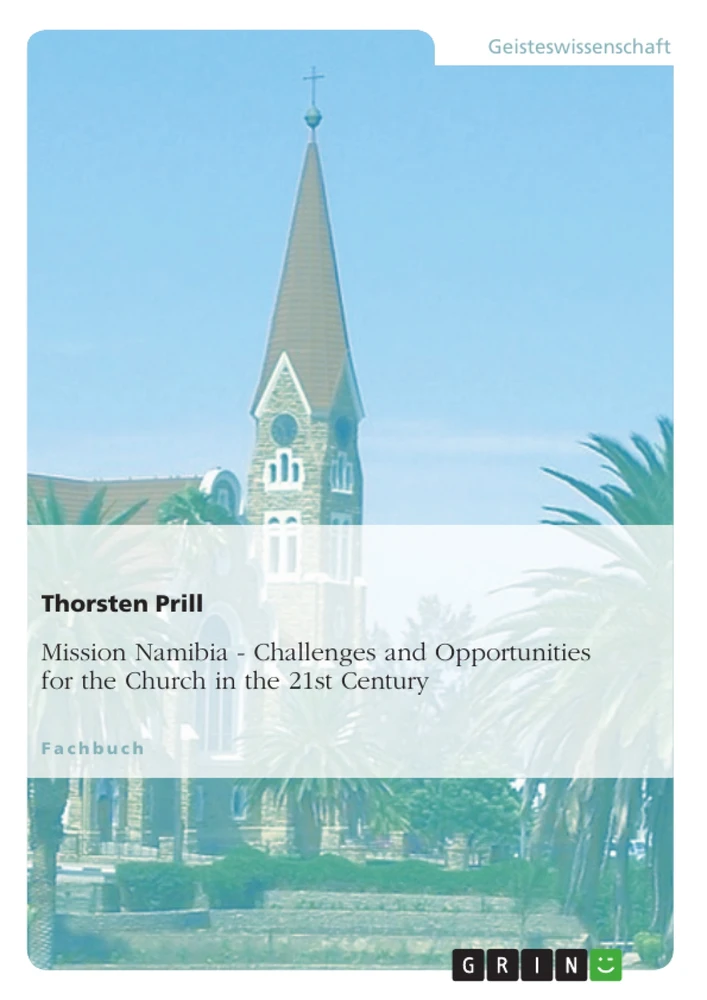
Table of Contents
Para-church ministry: God’s mission in Namibia: the situation of the church and the strategic role of para-church organisations
Doctrine: Money, poverty and the church: the danger of the prosperity gospel in Namibia
Theological education: The quest for appropriate models of theological education for Africa
Church leadership: Training leaders like Paul did: church leadership training in Namibia
Christian ethics: Faith that works: a study of James 2:14-26 with some insights for the Namibian church context
Mission practice: Theological controversies on the mission field in southern Africa: reasons, implications and responses
Contextualization: African names for God and the biblical concept of YAHWEH
Mission history: Carl Hugo Hahn and the spiritual condition of the Herero-Mbanderu people
Objectives & Topics
This volume provides a theological exploration of the challenges and opportunities facing the Church in Namibia during the 21st century. It addresses critical issues such as the impact of the prosperity gospel, the necessity for contextually relevant theological education, the biblical model for leadership development, and the complexities of mission practice in a post-colonial, pluralistic society.
- Theological challenges including prosperity gospel and syncretism
- Development of sustainable models for theological education
- Strategic training of church leaders based on apostolic patterns
- Missiological reflection on poverty, social justice, and church mission
- Critical examination of traditional African spirituality versus biblical revelation
Excerpt from the Book
The forms of the prosperity gospel
The prosperity gospel comes in two forms: 1) the militant form (radical); 2) the diffused form (subtle). The former advocates that God’s will for every Christian is wealth, health, happiness and success. The latter is more motivational, creates the impression of a world with limitless possibilities and victories and without suffering. These two forms overlap each other in many ways. Regardless of their apparent differences, they both teach that true Christianity is marked by wealth, health, happiness and unlimited victorious living.
Summary of Chapters
Para-church ministry: God’s mission in Namibia: the situation of the church and the strategic role of para-church organisations: Analyzes the historical role of the Namibian Church and the strategic necessity of para-church organizations in addressing social and spiritual challenges.
Doctrine: Money, poverty and the church: the danger of the prosperity gospel in Namibia: Provides a critique of the prosperity gospel, highlighting its theological errors and the socio-economic impact on impoverished communities.
Theological education: The quest for appropriate models of theological education for Africa: Explores the need for theological education models that move beyond Western academic traditions and resonate with the African cultural context.
Church leadership: Training leaders like Paul did: church leadership training in Namibia: Proposes a model of local, mentorship-based leadership training based on the apostolic example of the Apostle Paul.
Christian ethics: Faith that works: a study of James 2:14-26 with some insights for the Namibian church context: Examines the biblical relationship between faith and works to address the disconnect between Christian profession and daily conduct in Namibia.
Mission practice: Theological controversies on the mission field in southern Africa: reasons, implications and responses: Discusses the impact of postmodern theological trends on mission organizations and reaffirms the necessity of church-centered mission.
Contextualization: African names for God and the biblical concept of YAHWEH: Critically evaluates the use of traditional African names for God and argues for the uniqueness of the biblical revelation of Yahweh.
Mission history: Carl Hugo Hahn and the spiritual condition of the Herero-Mbanderu people: Reflects on the missionary work of Carl Hugo Hahn and the historical spiritual context of the Herero-Mbanderu people.
Keywords
Namibia, Church mission, Para-church ministry, Prosperity gospel, Theological education, Church leadership, Christian ethics, James 2, Contextualization, Yahweh, African Traditional Religion, Carl Hugo Hahn, Herero-Mbanderu, Missiology, Biblical leadership.
Frequently Asked Questions
What is the fundamental focus of this publication?
The book explores the current state of Christian mission and church life in Namibia, addressing both the social challenges the country faces and the theological responses required by the Church.
What are the primary themes discussed in the essays?
Key themes include the critique of prosperity theology, the reformation of theological education in Africa, the training of local leadership, and the complex relationship between mission organizations and the local church.
What is the central goal regarding the Church in Namibia?
The primary goal is to equip Christians and leaders with biblical knowledge and practical skills to serve effectively in their unique socio-economic and cultural context.
What research methods are employed by the contributors?
The authors utilize a combination of biblical-theological analysis, historical research, and missiological reflection, often grounded in the practical experience of faculty members at the Namibia Evangelical Theological Seminary (NETS).
What does the book cover in its central chapters?
The central chapters address the "prosperity gospel" phenomenon, propose models for "Theological Education by Extension," and analyze the apostolic approach to mentoring future leaders.
Which keywords best describe this work?
The work is characterized by terms such as Missiology, Contextualization, Prosperity Gospel, Theological Education, and Leadership Development.
How does the book address the use of traditional African names for God?
Basilius Kasera argues that the use of traditional African names for God is problematic, as these names are often rooted in idolatrous concepts and are distinct from the biblical revelation of Yahweh.
What is the author's argument regarding leadership training?
Achim Rieger argues that for sustainable growth, leadership training in Namibia must be "low-cost and local," relying on pastors who model the mentorship approach of the Apostle Paul to train leaders within their own congregations.
How does the work assess the contribution of early missionaries like Carl Hugo Hahn?
Tuundjakuye Spencer Tjijenda defends the work of Carl Hugo Hahn, arguing that his critiques of the Herero-Mbanderu spiritual condition were motivated by genuine pastoral love and a desire to lead them toward the gospel of salvation.
Ende der Leseprobe aus 155 Seiten
- nach oben
- Arbeit zitieren
- Dr. Thorsten Prill (ed.) (Autor:in), 2012, Mission Namibia. Challenges and Opportunities for the Church in the 21st Century, München, Page::Imprint:: GRINVerlagOHG, https://www.diplomarbeiten24.de/document/203535

neugierig - aktuell - relevant
Entdecken Sie hilfreiche Tipps und Tricks rund ums Studium!

Entdecken Sie hilfreiche Tipps und Tricks rund ums Studium!
Ihre Hausarbeit / Abschlussarbeit:

- - Publikation als E-Book und Buch
- - Hohes Honorar auf die Verkäufe
- - Für Sie komplett kostenlos - mit ISBN
- - Es dauert nur 5 Minuten
- - Jede Arbeit findet Leser

- © GRIN Publishing GmbH.
- Alle Inhalte urheberrechtlich geschützt. Kopieren und verbreiten untersagt.
- info@grin.com
- AGB
- Open Publishing
Der GRIN Verlag hat sich seit 1998 auf die Veröffentlichung akademischer eBooks und Bücher spezialisiert. Der GRIN Verlag steht damit als erstes Unternehmen für User Generated Quality Content. Die Verlagsseiten GRIN.com, Hausarbeiten.de und Diplomarbeiten24 bieten für Hochschullehrer, Absolventen und Studenten die ideale Plattform, wissenschaftliche Texte wie Hausarbeiten, Referate, Bachelorarbeiten, Masterarbeiten, Diplomarbeiten, Dissertationen und wissenschaftliche Aufsätze einem breiten Publikum zu präsentieren.
Kostenfreie Veröffentlichung: Hausarbeit, Bachelorarbeit, Diplomarbeit, Dissertation, Masterarbeit, Interpretation oder Referat jetzt veröffentlichen!
Folgen Sie GRIN auf


- GRIN Verlag GmbH
-
- Nymphenburger Str. 86
- 80636
- Munich, Deutschland
- +49 89-550559-0
- +49 89-550559-10
- info@grin.com
-
