
präsentiert von

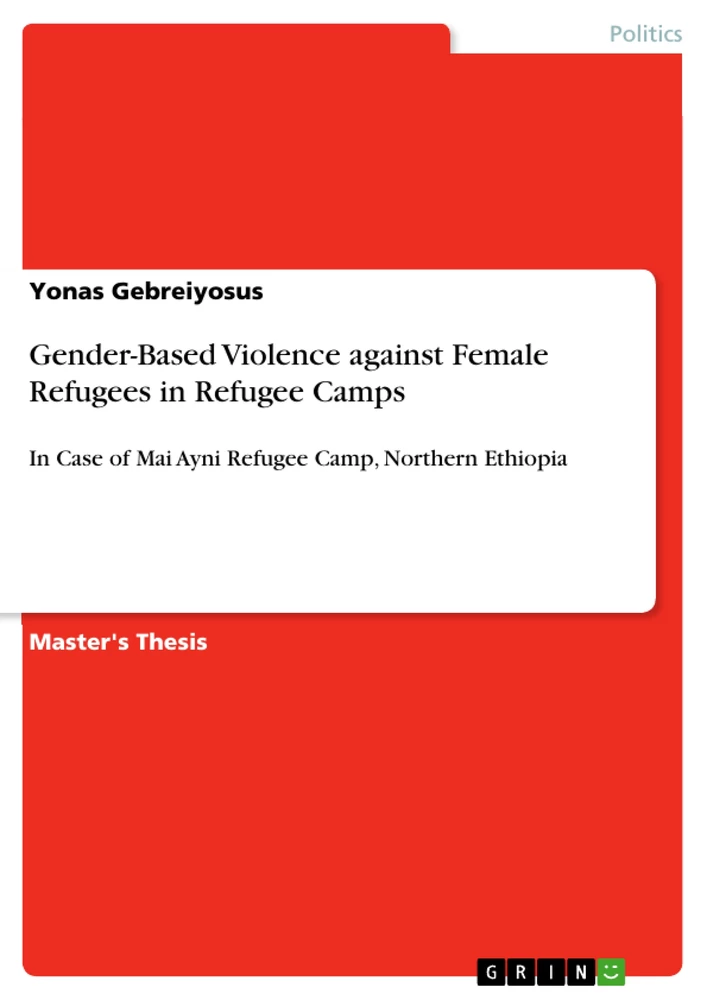
Table of Contents
1. CHAPTER ONE: INTRODUCTION
1.1. Introduction
1.2. Statement of the Problem
1.3. Objectives of the Study
1.3.1. General Objective
1.3.2. Specific Objectives
1.4. Research Questions
1.5. Significance of the Study
1.6. Scope of the Study
1.7. Organization of the Paper
1.8. Operational Definitions of Related Terms
2. CHAPTER TWO: REVIEW OF RELATED LITERATURE
2.1. Conceptualizing Gender- Based Violence
2.1.1. Forms of Gender-Based Violence
2.2. Causes of Gender- Based Violence
2.3. Consequences of Gender- Based Violence
2.4. Gender-Based Violence and Female Refugees
2.5. Overview of Major International Human Rights Instruments on Gender-Based Violence and Refugees
3. CHAPTER THREE: RESEARCH METHODOLOGY
3.1. Description of the Study Area and Site Selection
3.1.1. Description of the Study Area
3.1.2. Rationales for Selecting the Study Area
3.2. Research Strategies
3.3. Data Source
3.4. Sampling Techniques and Procedures
3.4.1. Sample Size Determination
3.4.2. Selection of Research Participant
3.5. Methods and Tools of Data Collection
3.5.1. In-depth Interview
3.5.2. Focus Group Discussion
3.5.3. Key Informants Interview
3.5.4. Document Analysis
3.5.5. Personal Observation
3.6. Data Analysis
3.7. Ethical Consideration
3.8. Problems Encountered During the Research Process
4. CHAPTER FOUR: FINDING AND ANALYSIS
4.1. Prevalence of Gender-Based Violence
4.1.1. Physical Violence
4.1.2. Socio-Economic Violence
4.1.3. Sexual Violence
4.2. Causes and Risk Factors for Gender-Based Violence against Female Refugees
4.2.1. Forced Idleness
4.2.2. Physical Insecurity
4.2.3. Men’s ‘Loss of Power’
4.2.4. Economic Dependency
4.2.5. Collapse of Social and Family Support Structures
4.2.6. Lack of Awareness
4.2.7. Poor Reporting, Coordination and Legal Enforcement Mechanisms
4.3. Consequences of Gender-Based Violence
5. CHAPTER FIVE: SUMMARY AND RECOMMENDATION
5.1. Summary
5.2. Recommendation
Research Objectives and Themes
This study aims to examine the prevalence, causes, and consequences of gender-based violence (GBV) against female refugees residing in the Mai Ayni refugee camp in Northern Ethiopia. The research seeks to understand how the camp environment, social structures, and economic circumstances contribute to the vulnerability of these women to various forms of abuse.
- Prevalence of physical, sexual, and socio-economic violence against female refugees.
- Root causes including forced idleness, economic dependency, and power dynamics.
- The impact of broken social and family support structures within the camp.
- Challenges in reporting mechanisms and legal enforcement in the camp setting.
- Short- and long-term consequences of GBV on the physical and psychosocial health of survivors.
Excerpt from the Book
4.1.1. Physical Violence
Physical violence is one form of gender based violence which includes beating, punching, kicking, biting, burning, maiming or killing, with or without weapons, selling and/or trading in human beings for forced sexual activities, forced labour or services, slavery or practices similar to slavery, servitude or removal of organs. Data collected from research participants show that female refugees were victims of physical violence in the camp.
My boyfriend usually beats me. I told this to his friends and elders in the camp and they advised him. However, as he continues beating me, I, later, informed the police officer, but they advise us to solve our problem peacefully.
I had been severely and frequently beaten by a refugee who considers himself as the one who loves me and cares about me. He broke my tooth, and he always threatens me. The situation went beyond my patience and I informed refugee representatives of the camp. They advised us to resolve the problem through mediation. However, he still continues to intimidate me and there is no change at all.
Summary of Chapters
CHAPTER ONE: INTRODUCTION: Outlines the global and local context of gender-based violence against female refugees and defines the research scope and objectives.
CHAPTER TWO: REVIEW OF RELATED LITERATURE: Explores international definitions, frameworks, and academic perspectives on gender-based violence within refugee settings.
CHAPTER THREE: RESEARCH METHODOLOGY: Describes the qualitative research design, data collection tools, and sampling procedures used at the Mai Ayni refugee camp.
CHAPTER FOUR: FINDING AND ANALYSIS: Analyzes the gathered data regarding the prevalence, causes, and consequences of various forms of violence against the camp's female refugee population.
CHAPTER FIVE: SUMMARY AND RECOMMENDATION: Concludes the study findings and provides policy-based recommendations for stakeholders to mitigate gender-based violence in the camp.
Keywords
Gender-Based Violence, Sexual Violence, Physical Violence, Socio-economic Violence, Female Refugees, Mai Ayni Refugee Camp, Human Rights, Perpetrators, Victims, Refugee Protection, Ethiopia, Empowerment, Psychosocial Health.
Frequently Asked Questions
What is the primary focus of this research?
This thesis examines the prevalence, root causes, and health and psychosocial consequences of gender-based violence (GBV) experienced by female refugees living in the Mai Ayni refugee camp in Northern Ethiopia.
Which forms of gender-based violence are covered?
The study specifically investigates three main categories: sexual violence (such as rape and gang rape), physical violence (including battery and assault), and socio-economic violence (such as discrimination and denial of services).
What is the core research objective?
The main objective is to identify how camp dynamics—including forced idleness, power imbalances, and economic dependency—create or exacerbate risks of violence for female refugees.
Which methodology was applied?
The research employed a qualitative methodology, utilizing in-depth interviews with eighteen female and five male refugees, focus group discussions (FGD), and key informant interviews with representatives from UNHCR, ARRA, and local medical/legal authorities.
What does the main body of the work address?
The main body (Chapter Four) provides an analysis of the prevalence and forms of violence, identifies specific risk factors like 'loss of power' among males and lack of community support, and details the traumatic outcomes for survivors.
What are the characterizing keywords of the study?
The study is characterized by terms such as Gender-Based Violence, Female Refugees, Mai Ayni Refugee Camp, Human Rights, Socio-economic Violence, and Victim Protection.
Why are female refugees in Mai Ayni specifically considered 'refugees within refugees'?
This phrase highlights their double vulnerability: they are refugees who fled conflict in their home country, and they subsequently become victims of further violence and marginalization within the refuge of the camp itself.
What role does 'forced idleness' play in the findings?
The findings identify forced idleness among male refugees as a major catalyst for violence. Due to camp policies prohibiting work, many men turn to drugs, alcohol, and pornography, which the study links to increased aggressive behavior toward female refugees.
Why is the lack of legal enforcement a critical finding?
The study reveals a systemic failure in reporting and legal follow-up; many cases go unreported due to fear, social stigma, lack of women's desks in police stations, and the physical/economic distance of the court system, leading to high levels of impunity for perpetrators.
Ende der Leseprobe aus 116 Seiten
- nach oben
- Arbeit zitieren
- Yonas Gebreiyosus (Autor:in), 2013, Gender-Based Violence against Female Refugees in Refugee Camps, München, Page::Imprint:: GRINVerlagOHG, https://www.diplomarbeiten24.de/document/212288

neugierig - aktuell - relevant
Entdecken Sie hilfreiche Tipps und Tricks rund ums Studium!

Entdecken Sie hilfreiche Tipps und Tricks rund ums Studium!
Ihre Hausarbeit / Abschlussarbeit:

- - Publikation als E-Book und Buch
- - Hohes Honorar auf die Verkäufe
- - Für Sie komplett kostenlos - mit ISBN
- - Es dauert nur 5 Minuten
- - Jede Arbeit findet Leser

- © GRIN Publishing GmbH.
- Alle Inhalte urheberrechtlich geschützt. Kopieren und verbreiten untersagt.
- info@grin.com
- AGB
- Open Publishing
Der GRIN Verlag hat sich seit 1998 auf die Veröffentlichung akademischer eBooks und Bücher spezialisiert. Der GRIN Verlag steht damit als erstes Unternehmen für User Generated Quality Content. Die Verlagsseiten GRIN.com, Hausarbeiten.de und Diplomarbeiten24 bieten für Hochschullehrer, Absolventen und Studenten die ideale Plattform, wissenschaftliche Texte wie Hausarbeiten, Referate, Bachelorarbeiten, Masterarbeiten, Diplomarbeiten, Dissertationen und wissenschaftliche Aufsätze einem breiten Publikum zu präsentieren.
Kostenfreie Veröffentlichung: Hausarbeit, Bachelorarbeit, Diplomarbeit, Dissertation, Masterarbeit, Interpretation oder Referat jetzt veröffentlichen!
Folgen Sie GRIN auf


- GRIN Verlag GmbH
-
- Nymphenburger Str. 86
- 80636
- Munich, Deutschland
- +49 89-550559-0
- +49 89-550559-10
- info@grin.com
-
