
präsentiert von

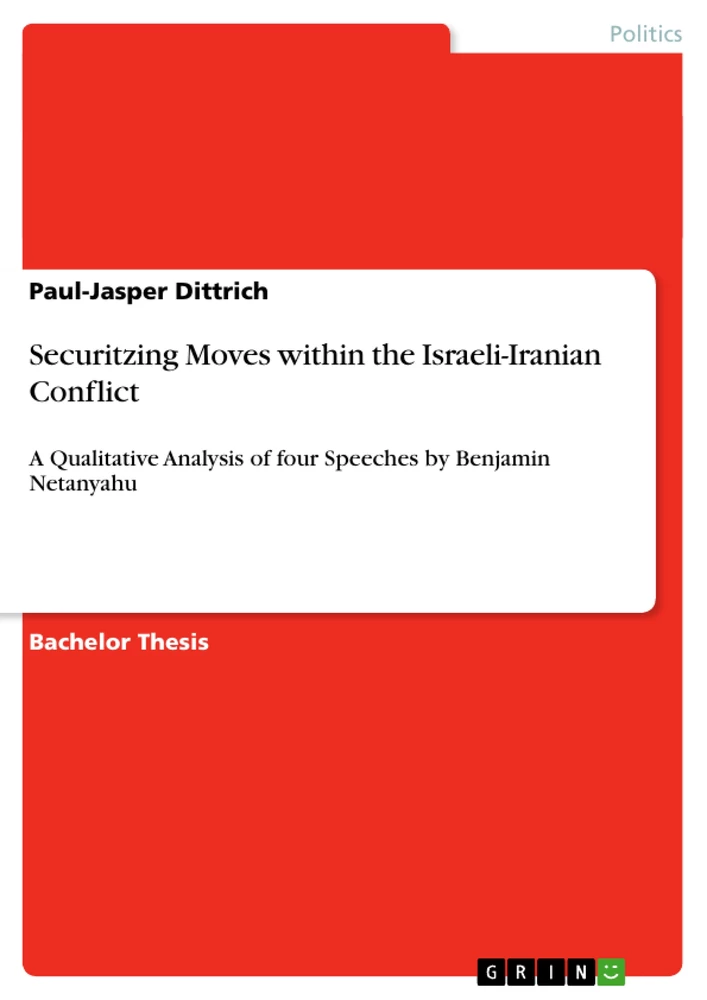
Table of Contents
1. Introduction
1. 1 Setting the Scene
1.2 Theoretical Framework: Security Studies and Securitization Theory
1.3 Hypotheses and Research Methodology
2. Theoretical Part
2.1 Introduction
2.2 Historical Aspects
2.2.1 The evolution of Security Studies since the end of the Cold War
2.2.2 The evolution of CS
2.3 Securitization
2.4 Sectors of Security (Political, Military, Societal, Economic and Environmental)
2.4.1 The Military Sector
2.4.2 The Societal Sector
2.5 Facilitating Conditions for Securitization / external and internal aspects
2.6 Securitizing actor and Referent Object
2.6.1 Referent Object
2.6.2 Securitizing Actor
2.7 Regional Security Complexes
2.8 Further development of CS after Security: A new Framework for Analysis
2.8.1 Overview
2.8.2 Parenthesis: Colin Hay on Crisis as Construction of „Meta-Narratives”
2.8.3 Macro-securitizations and the Narrative behind the GWoT (Buzan & Wæver 2009)
2.9 Conclusion Theoretical Part
3. Analysis
3.1 Introduction
3.2 Securitizing what and how – the INP and methodological questions
3.3 Operationalizing Theory: Qualitative Content Analysis (QCA)
3.4 Hypotheses
3.4.1 H1: Netanyahu securitizes the INP alongside the coordinates of the GWoT
3.4.2 Operationalizing H1: Creating Category and Dimensions
3.4.3 H2: Netanyahu securitizes the INP as an existential threat to the Jewish people
3.4.4 Operationalizing H2: Creating Category and Dimensions
3.5 The Securitizing Actor: Benjamin Netanyahu
3.6 Case-selection: Speeches: GA 2009 and 2012, Congress 2011, American Israeli Public Affairs Committee (AIPAC)
3.7 Analyzing H1: Netanyahu securitizes the INP alongside the coordinates of the GWoT
3.7.1 Overview
3.7.2 First part: Military Sector
3.7.2.1 Referent Object: Global Security
3.7.2.2 Threats to the referent object: WMD, International Terrorism
3.7.2.3 Iran as spreader of worldwide terrorism
3.7.2.4 Linguist, Semiotic, Figurative Dimension: Military Sector
3.7.3 Second Part: Societal Sector
3.7.3.1 Referent Object: Western Civilization
3.7.3.2 Threats to (Israel and) western civilization: Radical Islam endangers Western Way of Life, Freedom and (Scientific) progress
3.7.3.3 Iran as backward regime with medieval ideology vs. western world
3.7.3.4 Linguistic, semiotic, figurative dimension: societal sector
3.7.4 Summary H 1
3.8 Analyzing H2: Netanyahu securitizes the INP as an existential threat to the Jewish people
3.8.1 Overview
3.8.2 Referent Object: Jewish people (around the world)
3.8.3 Israel as ethnic nation, Netanyahu speaking on behalf of Israel as a nation
3.8.4 Remarks on the Holocaust
3.8.5 Iran as anti-Semitic, Holocaust denying regime
3.8.6 Linguistic, semiotic and figurative dimension
3.9 Summary H2
4. Conclusion
Objectives and Topics
This thesis investigates how Israeli Prime Minister Benjamin Netanyahu attempts to frame the Iranian nuclear program (INP) as a critical security issue through a series of public speeches. By applying securitization theory, the research aims to demonstrate how Netanyahu constructs the INP as a threat to global stability and an existential danger to the Jewish people, effectively linking the Iranian issue to existing dominant security narratives.
- The application of the Copenhagen School's securitization framework to political discourse.
- The rhetorical linkage between the Iranian nuclear program and the Global War on Terrorism.
- The framing of the Iranian regime as an existential threat to Jewish identity and the state of Israel.
- Methodological implementation of Qualitative Content Analysis (QCA) through information extraction techniques.
- The role of historical analogies, specifically the Holocaust and World War II, in contemporary security construction.
Excerpt from the Book
3.7.2.1 Referent Object: Global Security
This first dimension derives directly from Buzan and Wæver´s analysis of the GWoT as a macro-securitization (Buzan & Wæver 2009): Global security has to be invoked in one way or the other in order to display the scale of the securitizing move and also to link the move successfully to the macro-securitization GWoT. This dimension presents how global security is invoked as a referent object by Benjamin Netanyahu.
In all of the four speeches Netanyahu refers to the program as a threat to the security and stability of the entire world. During his speeches at the UN in 2009 and in 2012, Netanyahu declares openly that the referent object has to be broadened:
Perhaps some of you think that this man and his odious regime (Ahmadinejad and the Iranian government, A.N.) threaten only the Jews. You're wrong. History has shown us time and again that what starts with attacks on the Jews eventually ends up engulfing many others. (GA 2009 #7)28
At stake is not merely the future of my own country. At stake is the future of the world. (GA 2012 #12)
The broadening of the referent object works on a step by step logic that gradually increases the scope of insecurity and the level of the securitization:
Who among you would feel safe in the Middle East? Who would be safe in Europe? Who would be safe in America? Who would be safe anywhere? (GA 2012 #13)
Summary of Chapters
1. Introduction: This chapter introduces the core subject of the thesis, framing security as a contested concept and detailing the research approach regarding Benjamin Netanyahu's securitization of the Iranian nuclear program.
2. Theoretical Part: This section provides the foundational framework of securitization theory as developed by the Copenhagen School, including the definition of securitizing actors, referent objects, and security sectors.
3. Analysis: The analytical chapter applies the QCA methodology to four specific speeches by Netanyahu, testing hypotheses that link the Iranian nuclear program to the Global War on Terrorism and identifying its construction as an existential threat to the Jewish people.
4. Conclusion: The concluding chapter synthesizes the findings, confirming that Netanyahu successfully employs specific rhetorical strategies to frame the Iranian nuclear program within wider, well-recognized security narratives.
Keywords
Securitization, Copenhagen School, Benjamin Netanyahu, Iranian nuclear program, Global War on Terrorism, Qualitative Content Analysis, Existential Threat, Referent Object, Security Studies, Political Discourse, Middle East, Macro-securitization, Holocaust, Radical Islam, Foreign Policy.
Frequently Asked Questions
What is the core focus of this research?
The paper examines how Israeli Prime Minister Benjamin Netanyahu rhetorically constructs the Iranian nuclear program as an urgent security threat through a series of four key speeches delivered between 2009 and 2012.
What are the primary themes discussed in the analysis?
The research focuses on two main narrative strategies: linking the Iranian nuclear program to the Global War on Terrorism and framing it as an existential threat to the Jewish people through historical analogies.
What is the primary research goal?
The primary goal is to analyze whether and how a political leader uses "speech acts" to shift an issue from normal political debate into the realm of emergency security measures.
Which methodology is utilized to examine the speeches?
The author uses Qualitative Content Analysis (QCA) based on an extraction model developed by Jochen Gläser and Brit Laudel to systematically categorize and analyze the rhetorical structure of the speeches.
What topics are covered in the main body of the work?
The body chapters detail the theoretical framework of securitization, the selection of the case studies (the speeches), and the empirical analysis of those texts against two specific hypotheses.
Which keywords define this work?
Key terms include Securitization, Copenhagen School, Netanyahu, Iranian Nuclear Program, Global War on Terrorism, Existential Threat, and Qualitative Content Analysis.
Why did the author choose Benjamin Netanyahu as the subject?
Netanyahu is identified as a natural "securitizing actor" due to his high-level political authority and his consistent, long-term rhetoric regarding the Iranian threat, which aligns with the theoretical requirements of the study.
How does the author connect the Iranian nuclear program to the Holocaust?
The author demonstrates how Netanyahu frequently uses the Holocaust as an analogy, arguing that the Iranian regime’s rhetoric mimics Nazi anti-Semitism and poses a comparable existential threat, thereby legitimizing the necessity of preventive action.
What is the significance of the "red line" imagery in the analysis?
The author identifies the "red line" diagram presented by Netanyahu as a visual "point-of-no-return" speech act, which serves to dramatize the urgency and provide a simplified, metaphorical urgency for international intervention.
What are the implications of the "nuclear-armed Al-Qaeda" phrase?
This phrase functions as a "master signifier" that bridges the gap between different security fears, combining the institutionalized fear of terrorism with the danger of nuclear weapons to create a singular, multidimensional security threat in the audience's mind.
Ende der Leseprobe aus 96 Seiten
- nach oben
- Arbeit zitieren
- Paul-Jasper Dittrich (Autor:in), 2013, Securitzing Moves within the Israeli-Iranian Conflict , München, Page::Imprint:: GRINVerlagOHG, https://www.diplomarbeiten24.de/document/231547

neugierig - aktuell - relevant
Entdecken Sie hilfreiche Tipps und Tricks rund ums Studium!

Entdecken Sie hilfreiche Tipps und Tricks rund ums Studium!
Ihre Hausarbeit / Abschlussarbeit:

- - Publikation als E-Book und Buch
- - Hohes Honorar auf die Verkäufe
- - Für Sie komplett kostenlos - mit ISBN
- - Es dauert nur 5 Minuten
- - Jede Arbeit findet Leser

- © GRIN Publishing GmbH.
- Alle Inhalte urheberrechtlich geschützt. Kopieren und verbreiten untersagt.
- info@grin.com
- AGB
- Open Publishing
Der GRIN Verlag hat sich seit 1998 auf die Veröffentlichung akademischer eBooks und Bücher spezialisiert. Der GRIN Verlag steht damit als erstes Unternehmen für User Generated Quality Content. Die Verlagsseiten GRIN.com, Hausarbeiten.de und Diplomarbeiten24 bieten für Hochschullehrer, Absolventen und Studenten die ideale Plattform, wissenschaftliche Texte wie Hausarbeiten, Referate, Bachelorarbeiten, Masterarbeiten, Diplomarbeiten, Dissertationen und wissenschaftliche Aufsätze einem breiten Publikum zu präsentieren.
Kostenfreie Veröffentlichung: Hausarbeit, Bachelorarbeit, Diplomarbeit, Dissertation, Masterarbeit, Interpretation oder Referat jetzt veröffentlichen!
Folgen Sie GRIN auf


- GRIN Verlag GmbH
-
- Nymphenburger Str. 86
- 80636
- Munich, Deutschland
- +49 89-550559-0
- +49 89-550559-10
- info@grin.com
-
