
präsentiert von

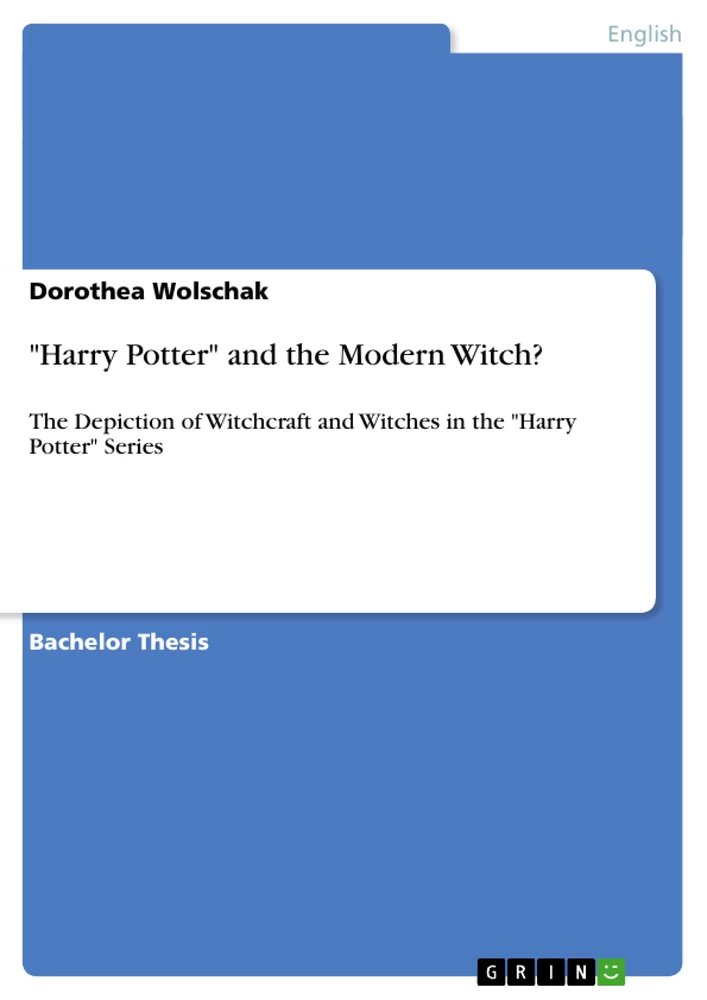
Table of Contents
I. Introduction
II. Theory on Witches
1. "Which witch is a witch?"
2. Religion, Magic, Sorcery or Witchcraft?
3. A History of Witchcraft Persecution
3.1. Once Upon a Time... or How it All Began
3.2. Hunting for Witches
3.2.1. Legal Basis for Witch-Persecution
3.2.2. Trapping Wicked Witches: The Witch Trials
3.2.3. Burning of Witches
3.3. The Historical Witch
3.3.1. The Usual Suspects
3.3.2. Witch hunt = Woman-hunt?
3.3.3. The Pentagram of Historical Witchcraft
3.3.4. The Appearance of the Witch
4. Witchcraft through the Ages
III. Witchcraft and Witches in the Harry Potter Novels
1. Witchcraft in Literature
2. The Phenomenon of Harry Potter
3. Harry Potter and the Modern Witch? - The Depiction of Witchcraft and Witches in the Harry Potter Series
3.1. The Harry Potter Universe
3.1.1. Muggle, Mudblood, Half-Blood, Pure-Blood
3.1.2. Magical Places
3.1.3. Magical Creatures
3.1.4. Magical Reality?
3.2. Religion in the Harry Potter Series
3.3. The Depiction of Witchcraft and Wizardry in the Harry Potter Novels
3.3.1. Hogwarts' Magic Education
3.3.2. Avada Kedavra! - The Dark Arts
3.3.3. Phoenix Feather, Dragon Heartstrings and Unicorn Hair - Harry Potter's Magical Ingredients
3.4. Harry Potter and the Girls - Gender Issues in the Harry Potter Books
3.4.1. Witches in the Harry Potter Novels
3.4.2. The Appearance of Harry Potter's Witches
IV. Conclusion
Objectives and Core Themes
The primary objective of this thesis is to investigate whether and how witchcraft and witches in the Harry Potter series can be considered modern. By establishing a comparative framework between historical perceptions of witchcraft during the Early Modern Era and the magical representation in the novels, the research seeks to determine if the series mirrors historical witch imagery or presents a contemporary, progressive alternative.
- Comparative analysis of historical witch-persecution and the magical reality of the Harry Potter universe.
- Investigation of social, religious, and gender-related stereotypes in the portrayal of witches.
- Evaluation of the role of institutions, such as Hogwarts and the Ministry of Magic, in shaping modern magical identity.
- Examination of the dichotomy between good and evil as represented in the characters of the novels.
Excerpt from the Book
1. "Which witch is a witch?"
Everybody has a certain image of a witch in mind. This image is probably created or highly influenced by the Brothers Grimms' fairy tale witch and her numerous illustrations in children's picture books and adaptations into Walt Disney cartoon films. However, even the Grimms' image of a typical witch is not a fabrication of their imaginations, but rather underlies certain associations with older images of witches and witchcraft of folklore and an actual, historical foundation.
It is remarkable that though most laymen would situate witchcraft beliefs and persecution in the Dark Medieval Times, they actually took place in the Early Modern Times. The Early Modern Era, specifically the years between 1450 and 1750, approximately constitutes the period of the European witch-hunt, also labelled as the European “witch-craze”, witch-scare or witch-panic. During these times, thousands of alleged witches and wizards were being persecuted and fated to die at the stake. Specially created occupations such as witch-doctors, witch-hunters and -finders or “witch prickers” facilitated “for three centuries from 1450 to 1750, the shocking nightmare, the foulest crime and deepest shame of western civilization, the blackout of everything that homo sapiens, the reasoning man, have ever upheld.”
The British historian Trevor-Roper characterises this period as a “bizarre but coherent intellectual system” which is composed of the common belief that the alleged witch works in cooperation with the Devil against the State and God. In the next chapters, the concepts of religion, magic, witchcraft and sorcery will be delimited and the amply defined term of the historical witch will be summarised so as to able to compare it with the witchcraft image in the Harry Potter series.
Chapter Summaries
I. Introduction: Outlines the scope of the study and the academic context of the Harry Potter phenomenon in relation to historical witchcraft research.
II. Theory on Witches: Defines key terms like religion, magic, and sorcery while providing a historical overview of the European witch-hunts between 1450 and 1750.
III. Witchcraft and Witches in the Harry Potter Novels: Conducts a deep analysis of the magical world of Harry Potter, comparing its structure, creatures, and gender representations against the historical model of the witch.
IV. Conclusion: Summarizes the findings, concluding that while some parallels exist, the Harry Potter novels present a modern, romanticized view of witchcraft that distances itself from historical diabolical beliefs.
Keywords
Harry Potter, witchcraft, historical witch-hunt, magic, sorcery, Early Modern Era, Malleus Maleficarum, gender stereotypes, folklore, modern witchcraft, Hogwarts, religious history, demonology, wizardry, diabolical witch.
Frequently Asked Questions
What is the primary subject of this thesis?
The thesis explores the representation of witchcraft and witches in the Harry Potter series, analyzing whether they adhere to historical stereotypes or present a modern reimagining of these concepts.
What are the core thematic fields covered?
The document covers the historical background of European witch-hunts, the evolution of the witch stereotype, literary depictions of magic, and specific gender and sociological issues present in the Harry Potter novels.
What is the central research question?
The central research question aims to determine if the depiction of witches in Harry Potter is truly modern or if it inadvertently reflects the archaic, often negative, historical images of witchcraft from the Early Modern period.
Which scientific methods are applied?
The paper utilizes a qualitative literary and historical analysis, contrasting historical primary and secondary sources with the content of the Harry Potter books to draw comparative conclusions.
What is the focus of the main body?
The main body is divided into a theoretical section examining historical witch-persecution and an analytical section that examines the Harry Potter universe, including its magical education, gender roles, and character archetypes.
Which keywords characterize this work?
The work is characterized by terms like witchcraft, Early Modern Era, magic, sorcery, Harry Potter, gender stereotypes, and demonology.
How does the author view the 'good' vs 'evil' dichotomy in the novels?
The author argues that while historical witchcraft was strictly labeled as evil and associated with the Devil, Harry Potter presents a more nuanced, modern ambiguity where characters are defined by their choices and actions rather than an inherent connection to demonic forces.
What role does the 'Malleus Maleficarum' play in this study?
The 'Malleus Maleficarum' serves as a crucial historical reference point, representing the institutionalized and misogynistic mindset of the Early Modern Era that the author uses to contrast against the modern, more emancipated female characters in the Potter series.
Does the author believe the Harry Potter series promotes occultism?
The author notes that while some critics raise concerns about occult themes, the study concludes that the series is largely devoid of traditional religious undertones and functions more as a modern narrative of good versus evil in a secular context.
Ende der Leseprobe aus 83 Seiten
- nach oben
- Arbeit zitieren
- Dorothea Wolschak (Autor:in), 2013, "Harry Potter" and the Modern Witch?, München, Page::Imprint:: GRINVerlagOHG, https://www.diplomarbeiten24.de/document/275977

neugierig - aktuell - relevant
Entdecken Sie hilfreiche Tipps und Tricks rund ums Studium!

Entdecken Sie hilfreiche Tipps und Tricks rund ums Studium!
Ihre Hausarbeit / Abschlussarbeit:

- - Publikation als E-Book und Buch
- - Hohes Honorar auf die Verkäufe
- - Für Sie komplett kostenlos - mit ISBN
- - Es dauert nur 5 Minuten
- - Jede Arbeit findet Leser

- © GRIN Publishing GmbH.
- Alle Inhalte urheberrechtlich geschützt. Kopieren und verbreiten untersagt.
- info@grin.com
- AGB
- Open Publishing
Der GRIN Verlag hat sich seit 1998 auf die Veröffentlichung akademischer eBooks und Bücher spezialisiert. Der GRIN Verlag steht damit als erstes Unternehmen für User Generated Quality Content. Die Verlagsseiten GRIN.com, Hausarbeiten.de und Diplomarbeiten24 bieten für Hochschullehrer, Absolventen und Studenten die ideale Plattform, wissenschaftliche Texte wie Hausarbeiten, Referate, Bachelorarbeiten, Masterarbeiten, Diplomarbeiten, Dissertationen und wissenschaftliche Aufsätze einem breiten Publikum zu präsentieren.
Kostenfreie Veröffentlichung: Hausarbeit, Bachelorarbeit, Diplomarbeit, Dissertation, Masterarbeit, Interpretation oder Referat jetzt veröffentlichen!
Folgen Sie GRIN auf


- GRIN Verlag GmbH
-
- Nymphenburger Str. 86
- 80636
- Munich, Deutschland
- +49 89-550559-0
- +49 89-550559-10
- info@grin.com
-
