
präsentiert von

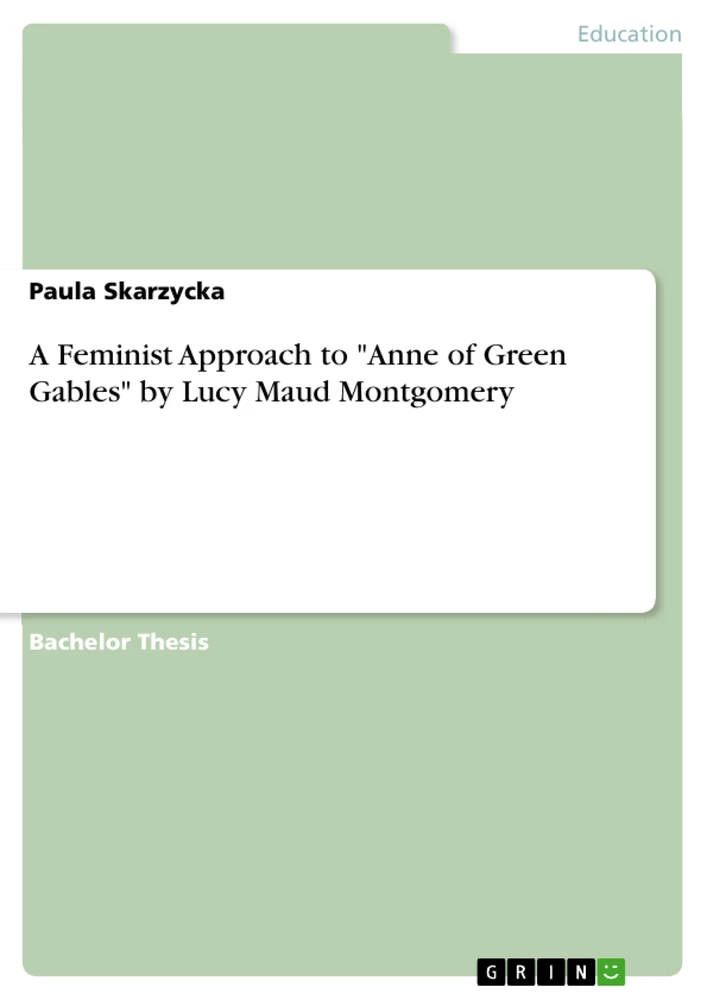
Table of Contents
Introduction
The Canadian Problem
Anne in the Eyes of the Feminist
Chapter I: Anne Shirley vs. Tropes
1.1 “The Lovable Alpha Bitch That Dies”
1.2 “The Apron Matron That Gossips”
1.3 “The Capable Damsel in Distress”
1.4 “The Proper Lady”
1.5 “The Manic Pixie Dream Girl”
Chapter II: Tropes vs. Anne Blythe
2.1 “The Proper Lady”
2.2 "The Gossipy Hen"
2.3 “The Housewife”
2.4 “The Dying Swan”
Chapter III: Relationships
Conclusion
Research Objectives and Themes
This thesis examines the transformation of Anne Shirley into the married Anne Blythe to determine whether the character and the series can be considered feminist. The research questions whether Anne’s feminist traits are lost upon her transition into domestic life, analyzing how stereotypical tropes affect her portrayal and the overall series narrative.
- Feminist criticism of literary character representation
- Impact of marriage and domesticity on female autonomy
- Analysis of gendered tropes in the Anne of Green Gables series
- Comparison between maternal feminism and Third Wave Feminist perspectives
- The decline of female agency in the later novels of the series
Excerpt from the Book
1.3 “The Capable Damsel in Distress”
Anne is portrayed as an intelligent and brave woman, who is able to compete with her male counterparts and whose personality is somewhat tomboyish. When she is challenged by Josie Pye to walk on a ridgepole of a roof, she does it (AoGG 233). She sprains her ankle as a result, but she still “looks on the bright side of things” (235). When Gilbert Blythe catches one of her braids and says “carrots,” she hits him on the head with her slate so hard that the slate breaks into pieces (141), so she has quite a temper. She prefers to play outside and is not afraid of lying in a boat all by herself (284). She is a proud girl and never lets anyone belittle her—she even insults Mrs. Lynde, calling her fat and clumsy (84), when the lady criticized her looks.
While all the examples posed by me in the previous paragraph prove that Anne possesses some of the negative traits that are traditionally linked with the males, such as temper, pride, or boldness, she also has some other that are definitely positive: she is able to remain calm in possibly dangerous situations. She is the one who knows how to take care of Minnie when she has croup, while both Diana and the nanny hired by the Barrys are panicking. Even the doctor says that the little girl was saved by Anne, claiming that That little redheaded girl they have over at Cuthbert's is as smart as they make them. I tell you she saved that baby's life, for it would have been too late by the time I got there. She seems to have a skill and presence of mind perfectly wonderful in a child of her age. I never saw anything like the eyes of her when she was explaining the case to me. (182)
Chapter Summaries
Chapter I: Anne Shirley vs. Tropes: This chapter analyzes how the young Anne Shirley defies common literary stereotypes and gendered expectations through her tomboyish nature and academic success.
Chapter II: Tropes vs. Anne Blythe: This section examines the transition of the protagonist into the married Anne Blythe, arguing that she adopts restrictive social roles and conforms to conventional stereotypes.
Chapter III: Relationships: This chapter explores the shifts in social dynamics within the series, contrasting the empowered female networks of the early books with the traditional, marriage-centered relationships in the later ones.
Keywords
Anne of Green Gables, Lucy Maud Montgomery, Feminism, Literary Tropes, Anne Shirley, Anne Blythe, Gender roles, Maternal feminism, Domesticity, Victorian literature, Female agency, Patriarchy, Canadian literature, Character development, Stereotypes
Frequently Asked Questions
What is the core focus of this thesis?
The thesis investigates whether the character of Anne Shirley remains a feminist figure throughout the entire Anne of Green Gables series or if she loses these traits after marrying and becoming Anne Blythe.
What are the primary thematic fields covered?
The work covers feminist literary criticism, the evolution of gender roles in early 20th-century Canada, and the analysis of common stock characters in children's literature.
What is the primary research goal?
The goal is to prove that while Anne Shirley serves as a feminist role model, the series undergoes a negative shift toward anti-feminist conventions as it progresses into the later volumes.
Which scientific method is employed?
The author employs a feminist literary approach, utilizing character analysis and comparing the protagonist’s actions against established gendered tropes.
What is analyzed in the main body of the work?
The main body compares Anne’s behavior and choices in the early novels against the later ones, focusing on chapters dealing with specific tropes, relationship dynamics, and the impact of the "matron" role.
Which keywords best characterize this work?
Key terms include Anne of Green Gables, feminism, gender roles, domesticity, and the transition from "Anne Shirley" to "Anne Blythe."
How does the author define the "Manic Pixie Dream Girl" in relation to Anne?
The author suggests Anne possesses some traits of this trope but notes that she serves to empower other women rather than just male protagonists, a quality she loses upon marriage.
What is the significance of the "Damsel in Distress" analysis?
The author highlights that even when Anne is placed in dangerous situations, she typically remains an active agent who saves herself, contrasting her with traditional, passive literary damsels.
Why does the author consider the later books "painful" to read?
The author argues that the later books abandon the freshness and independence of the early novels, transforming Anne into a one-dimensional, submissive matron whose only concerns are local gossip and matchmaking.
Ende der Leseprobe aus 33 Seiten
- nach oben
- Arbeit zitieren
- Paula Skarzycka (Autor:in), 2014, A Feminist Approach to "Anne of Green Gables" by Lucy Maud Montgomery, München, Page::Imprint:: GRINVerlagOHG, https://www.diplomarbeiten24.de/document/277487

neugierig - aktuell - relevant
Entdecken Sie hilfreiche Tipps und Tricks rund ums Studium!

Entdecken Sie hilfreiche Tipps und Tricks rund ums Studium!
Ihre Hausarbeit / Abschlussarbeit:

- - Publikation als E-Book und Buch
- - Hohes Honorar auf die Verkäufe
- - Für Sie komplett kostenlos - mit ISBN
- - Es dauert nur 5 Minuten
- - Jede Arbeit findet Leser

- © GRIN Publishing GmbH.
- Alle Inhalte urheberrechtlich geschützt. Kopieren und verbreiten untersagt.
- info@grin.com
- AGB
- Open Publishing
Der GRIN Verlag hat sich seit 1998 auf die Veröffentlichung akademischer eBooks und Bücher spezialisiert. Der GRIN Verlag steht damit als erstes Unternehmen für User Generated Quality Content. Die Verlagsseiten GRIN.com, Hausarbeiten.de und Diplomarbeiten24 bieten für Hochschullehrer, Absolventen und Studenten die ideale Plattform, wissenschaftliche Texte wie Hausarbeiten, Referate, Bachelorarbeiten, Masterarbeiten, Diplomarbeiten, Dissertationen und wissenschaftliche Aufsätze einem breiten Publikum zu präsentieren.
Kostenfreie Veröffentlichung: Hausarbeit, Bachelorarbeit, Diplomarbeit, Dissertation, Masterarbeit, Interpretation oder Referat jetzt veröffentlichen!
Folgen Sie GRIN auf


- GRIN Verlag GmbH
-
- Nymphenburger Str. 86
- 80636
- Munich, Deutschland
- +49 89-550559-0
- +49 89-550559-10
- info@grin.com
-
