
präsentiert von

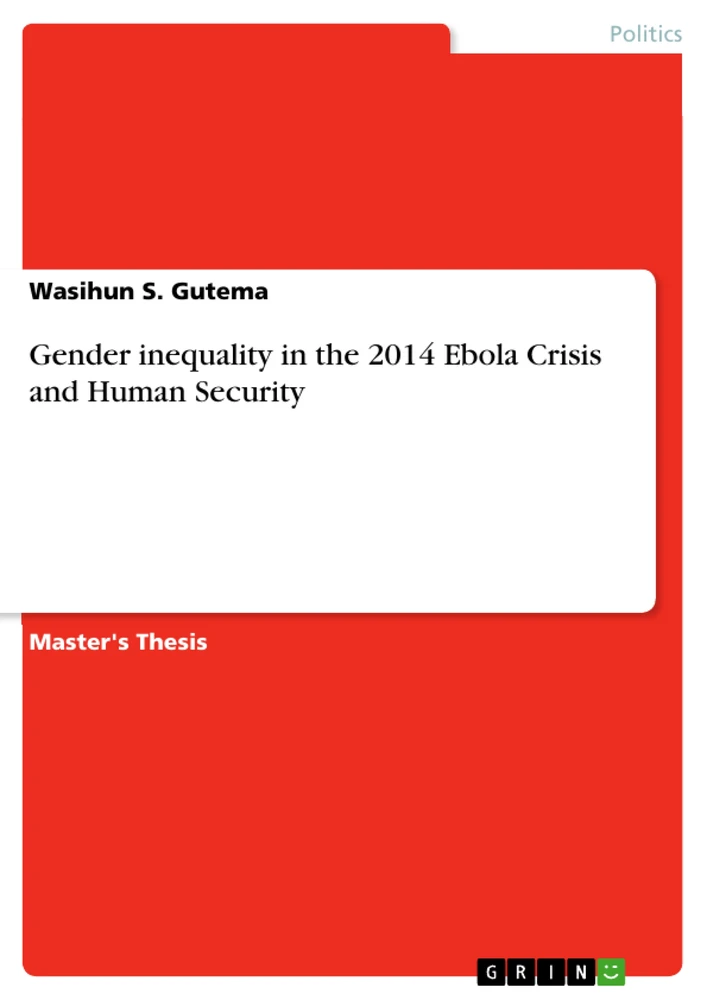
Table of Contents
1. Gender disparity and infectious diseases
2. Infectious diseases and Human Security
3. Feminism and Infectious diseases through the lenses of the Ebola virus
1. From Gender perspective
1.1. Time Poverty as a contributing factor
1.2. Carrying Roles
1.3. When Culture is the enemy
2. A Human Security Perspective
2.1. How fear aggravated the Ebola Expansion among the women population
2.2. Government failure
Research Objectives & Key Themes
The primary objective of this research is to examine the 2014 Ebola crisis in West Africa through a human security lens, specifically focusing on how deep-rooted gender inequality contributed to the disproportionate impact of the disease on the female population.
- The intersection of patriarchal cultural norms and the increased susceptibility of women to infectious diseases.
- The concept of "time poverty" and how gendered household roles limited women's access to critical health information.
- The influence of traditional funeral and burial practices in accelerating the transmission of the Ebola virus.
- The role of government failures, including information censorship and inadequate resource allocation, in exacerbating gender-based health inequities.
Excerpt from the Book
1.1. Time Poverty as a contributing factor
Kalenkoski and Hamrick (2014, p. 6650) defined time poverty as a concept that individuals do not have enough discretionary time – the time available after engaging in necessary activities like sleep and in the committed activities of paid and unpaid work – to engage in activities that build their social and human capital. Kalenkoski and Hamrick (p. 6650) farther define time poverty as a level of discretionary time below which individuals are considered to be “time poor.” Such thresholds are often defined relative to a population distribution although absolute thresholds can be defined based on the minimum amount of time required to perform certain tasks. According to the World Bank (2006, p. 77) time poor individuals are extremely pressed for time and unable to allocate time for important activities. These activities may vary but most importantly are time for seeking information, knowledge and training to widen the horizons of one’s understating regarding diseases or anything that jeopardizes the life situation. In this case, time poverty is linked to lack of time for the Western African women to seek knowledge and information about the Ebola pandemic.
Time poverty in the Ebola crisis is crucial as lack of time among the women population contributed to the expansion of the disease. Time poverty contributed in that women were preoccupied with other household staffs which included the carrying economy, fetching, agriculture, crop production, marketing and collecting firewood. This has prohibited the women population from seeking knowledge about the disease or compelled them from taking part in community engagement discussions that could have helped them to prevent themselves from the diseases. The world Bank Report (2006, p. 67) asserts this notion that women are poorer than men in terms of time because they were systematically add up domestic and care duties. Women’s time is taken by other household economies that deprive them from participating in knowledge seeking activities.
Summary of Chapters
1. Gender disparity and infectious diseases: Examines how social and gender-based inequalities create unequal exposure to infectious diseases, highlighting the role of occupational and cultural norms.
2. Infectious diseases and Human Security: Defines human security within the context of pandemics, focusing on how freedom from fear and want is compromised by the outbreak of infectious diseases.
3. Feminism and Infectious diseases through the lenses of the Ebola virus: Analyzes the Ebola crisis using feminist theory to understand how patriarchal power structures and gender-based resource control marginalize women.
1. From Gender perspective: Investigates the specific cultural and social factors—such as time poverty, caregiving roles, and harmful traditional practices—that exacerbated the impact of Ebola on women.
2. A Human Security Perspective: Explores how government failures and the prevailing climate of fear created systemic insecurities that disproportionately affected women during the crisis.
Keywords
Ebola Virus Disease, Gender Inequality, Human Security, West Africa, Feminism, Carrying Roles, Time Poverty, Public Health, Patriarchy, Traditional Healing, Quarantine, Gender-Based Violence, Infectious Diseases, Government Policy, Socio-economic Status
Frequently Asked Questions
What is the core subject of this paper?
The paper explores how gender inequality exacerbated the 2014 Ebola crisis in West Africa and how this resulted in a significant breach of human security for women.
What are the central themes discussed in this work?
Key themes include gender-based power imbalances, the social construction of "carrying roles" for women, the impact of time poverty on health knowledge, and the negative role of certain cultural and government practices.
What is the primary research goal?
The goal is to articulate the specific causal links between patriarchal cultural doctrines, limited government intervention, and the disproportionately high infection and death rates among women during the 2014 Ebola outbreak.
What scientific methodology is applied here?
The study employs a qualitative content analysis of existing literature, including reports from international NGOs, the World Health Organization, and various scholarly journals.
What is covered in the main body of the text?
The main body analyzes the literature on gender disparity in infectious diseases, applies the human security framework to the Ebola crisis, and evaluates specific contributing factors like caregiving responsibilities and political failures.
Which keywords characterize this research?
The research is characterized by terms such as human security, gender inequality, Ebola, West Africa, caregiving, time poverty, and feminist theory.
How does "time poverty" influence infection rates?
Time poverty limits women's access to crucial health information and participation in community prevention initiatives because they are overwhelmed by unpaid domestic and caregiving duties.
What role did government policy play in the transmission?
Government failures, such as restricting access to information and implementing ineffective, potentially harmful quarantine strategies, limited the public’s ability to protect themselves effectively.
What is the significance of the "carrying role" mentioned in the paper?
The "carrying role" refers to the culturally assigned duty of women to care for the sick, which put them in direct, unprotected contact with body fluids, thereby increasing their risk of Ebola infection.
Ende der Leseprobe aus 43 Seiten
- nach oben
- Arbeit zitieren
- Wasihun S. Gutema (Autor:in), 2017, Gender inequality in the 2014 Ebola Crisis and Human Security, München, Page::Imprint:: GRINVerlagOHG, https://www.diplomarbeiten24.de/document/368125

neugierig - aktuell - relevant
Entdecken Sie hilfreiche Tipps und Tricks rund ums Studium!

Entdecken Sie hilfreiche Tipps und Tricks rund ums Studium!
Ihre Hausarbeit / Abschlussarbeit:

- - Publikation als E-Book und Buch
- - Hohes Honorar auf die Verkäufe
- - Für Sie komplett kostenlos - mit ISBN
- - Es dauert nur 5 Minuten
- - Jede Arbeit findet Leser

- © GRIN Publishing GmbH.
- Alle Inhalte urheberrechtlich geschützt. Kopieren und verbreiten untersagt.
- info@grin.com
- AGB
- Open Publishing
Der GRIN Verlag hat sich seit 1998 auf die Veröffentlichung akademischer eBooks und Bücher spezialisiert. Der GRIN Verlag steht damit als erstes Unternehmen für User Generated Quality Content. Die Verlagsseiten GRIN.com, Hausarbeiten.de und Diplomarbeiten24 bieten für Hochschullehrer, Absolventen und Studenten die ideale Plattform, wissenschaftliche Texte wie Hausarbeiten, Referate, Bachelorarbeiten, Masterarbeiten, Diplomarbeiten, Dissertationen und wissenschaftliche Aufsätze einem breiten Publikum zu präsentieren.
Kostenfreie Veröffentlichung: Hausarbeit, Bachelorarbeit, Diplomarbeit, Dissertation, Masterarbeit, Interpretation oder Referat jetzt veröffentlichen!
Folgen Sie GRIN auf


- GRIN Verlag GmbH
-
- Nymphenburger Str. 86
- 80636
- Munich, Deutschland
- +49 89-550559-0
- +49 89-550559-10
- info@grin.com
-
