
präsentiert von

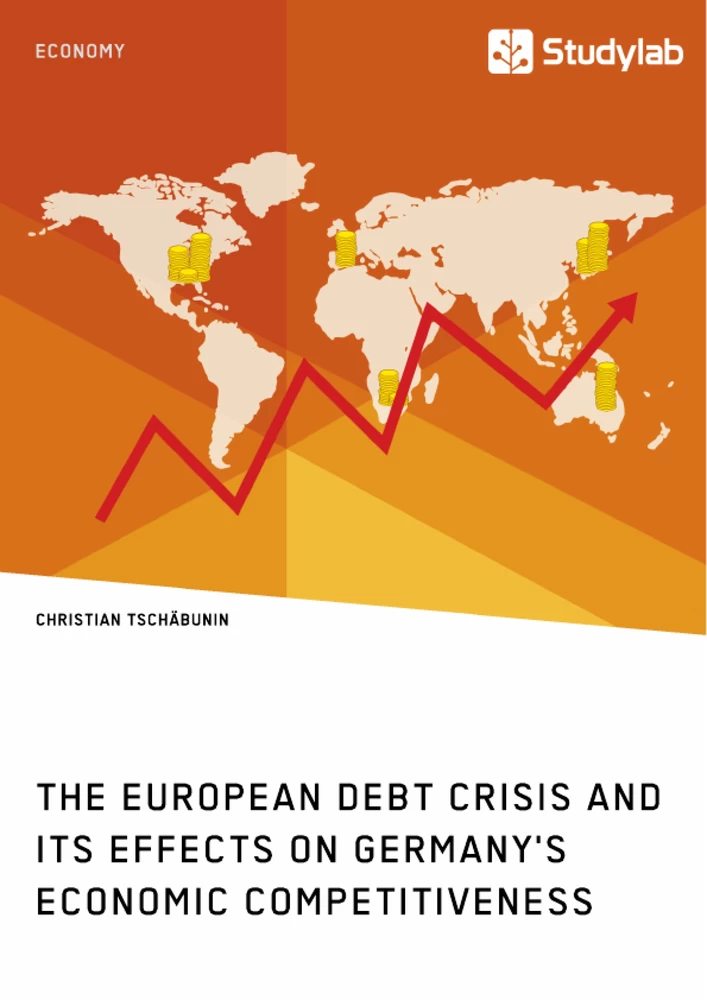
Table of Contents
1 Introduction
1.1 Motivation, Research Question and Objective
1.2 Structure of the Work and Methodological Approach
2 The European Debt Crisis: Development, Causes and the Role of Germany
2.1 Evolution of the European Debt Crisis
2.2 Causes of the Crisis and the EU’s Recovery Strategy
2.3 The Euro Crisis’ possible influence on Germany’s competitiveness
3 Economic Competitiveness as an Indicator for a Country’s Prosperity
3.1 Different Approaches to the Term “Competitiveness”
3.2 Ability to Sell as a Measure of Competitiveness
3.3 Country Rankings as an Alternative Indicator for Competitiveness
4 Germany’s Competitiveness Indicators in the Context of the Euro Crisis
4.1 Assessment of Unit Labour Costs
4.2 Assessment of Real Effective Exchange Rates
4.3 Assessment of the Current Account Balance
4.4 Assessment of the Global Competitiveness Index
5 Conclusive Implications
5.1 How has Germany’s competitiveness been affected by the Euro crisis?
5.2 Limitations of the Study and Suggestions for Further Research
5.3 Conclusion and Policy Recommendations for Germany
Objectives and Topics
This work examines the impact of the European debt crisis on Germany's economic competitiveness. The primary research question addresses whether and in what way the financial crisis in the Eurozone has threatened or altered Germany's competitive standing in international markets, aiming to provide policy recommendations from a German perspective.
- Analysis of the origins and evolution of the European debt crisis.
- Theoretical examination of the concept of "economic competitiveness" for nations.
- Empirical evaluation of Germany's competitiveness using key metrics like Unit Labour Costs and Real Effective Exchange Rates.
- Comparative analysis of Germany's economic performance against benchmarks such as Switzerland and Greece.
- Critical assessment of country rankings and their utility in policy-making.
Excerpt from the Book
1.1 Motivation, Research Question and Objective
“The red line has been reached. We cannot indefinitely finance other countries that do not play by the rules.”1 – Markus Söder, Bavarian finance minister, November 6, 2011
“The to-be-passed aids for Greece are without any alternative to ensure financial stability in the Euro area. Therefore, we protect our own currency if we act.”2 – Angela Merkel, German chancellor, May 5, 2010
Since the eruption of the European debt crisis, or simply “Euro crisis”, in the end of 2009, financial aids for other countries in the Euro area and the general strategy on how to react to the symptoms of the crisis remain a highly controversial topic in German politics. These two quotes from politicians of the same governing party alliance demonstrate the discord on the right approach among policymakers.
Summary of Chapters
1 Introduction: Introduces the research motivation, outlines the research question regarding Germany's competitiveness during the debt crisis, and defines the methodological approach.
2 The European Debt Crisis: Development, Causes and the Role of Germany: Provides a historical overview of the Euro crisis, identifies key structural causes, and analyzes Germany's specific political and economic role.
3 Economic Competitiveness as an Indicator for a Country’s Prosperity: Discusses theoretical definitions of competitiveness, focusing on the "ability to sell" and alternative framework-based indicators like country rankings.
4 Germany’s Competitiveness Indicators in the Context of the Euro Crisis: Combines theory and practice by empirically analyzing Germany's performance metrics, including Unit Labour Costs, exchange rates, and the Global Competitiveness Index.
5 Conclusive Implications: Synthesizes the empirical findings to assess the overall impact of the crisis on Germany's competitiveness and offers policy recommendations.
Keywords
European debt crisis, Germany, Economic competitiveness, Unit Labour Costs, Real Effective Exchange Rate, Current account balance, Global Competitiveness Index, Eurozone, Fiscal policy, Wage moderation, Bailout, Macroeconomic metrics, Prosperity, Monetary policy, Structural reforms.
Frequently Asked Questions
What is the fundamental focus of this publication?
The work examines the relationship between the European debt crisis and Germany's international economic competitiveness, analyzing how the country's economic indicators have evolved during this period.
What are the primary thematic fields covered?
The book covers the development of the Euro crisis, the theoretical definition of national competitiveness, and the empirical measurement of Germany's economic performance using various financial metrics.
What is the central research question?
The study aims to determine whether the threats posed by the European debt crisis have negatively or positively affected Germany's economic competitiveness.
Which scientific methods are employed?
The author utilizes a combination of comprehensive literature reviews and in-depth data-based analysis, tracking specific competitiveness metrics before and during the crisis timeframe.
What does the main body of the work address?
The main chapters provide a structured analysis of Germany's indicators—specifically Unit Labour Costs, real exchange rates, and current account balances—compared against benchmarks like Switzerland and Greece.
What are the key descriptive keywords?
Key terms include the Euro crisis, economic competitiveness, fiscal policy, Unit Labour Costs, and the Global Competitiveness Index.
How does the author define the "ability to sell"?
Drawing on Balassa (1962), the author defines this as the capacity of a country to compete on foreign and domestic markets based on cost-and-price developments and other productivity-related factors.
Why is Germany compared to Switzerland and Greece?
Switzerland serves as a successful non-EMU benchmark for high competitiveness, while Greece represents a proxy for the most severely affected crisis economies, allowing for a broader contextual assessment.
What is the conclusion regarding Germany's competitiveness during the crisis?
The study concludes that, despite rising Unit Labour Costs, Germany's economic competitiveness developed positively, supported by strong export surpluses and high global rankings.
Ende der Leseprobe aus 85 Seiten
- nach oben
- Arbeit zitieren
- Christian Tschäbunin (Autor:in), 2017, The European debt crisis and its effects on Germany's economic competitiveness, München, Page::Imprint:: GRINVerlagOHG, https://www.diplomarbeiten24.de/document/369619

neugierig - aktuell - relevant
Entdecken Sie hilfreiche Tipps und Tricks rund ums Studium!

Entdecken Sie hilfreiche Tipps und Tricks rund ums Studium!
Ihre Hausarbeit / Abschlussarbeit:

- - Publikation als E-Book und Buch
- - Hohes Honorar auf die Verkäufe
- - Für Sie komplett kostenlos - mit ISBN
- - Es dauert nur 5 Minuten
- - Jede Arbeit findet Leser

- © GRIN Publishing GmbH.
- Alle Inhalte urheberrechtlich geschützt. Kopieren und verbreiten untersagt.
- info@grin.com
- AGB
- Open Publishing
Der GRIN Verlag hat sich seit 1998 auf die Veröffentlichung akademischer eBooks und Bücher spezialisiert. Der GRIN Verlag steht damit als erstes Unternehmen für User Generated Quality Content. Die Verlagsseiten GRIN.com, Hausarbeiten.de und Diplomarbeiten24 bieten für Hochschullehrer, Absolventen und Studenten die ideale Plattform, wissenschaftliche Texte wie Hausarbeiten, Referate, Bachelorarbeiten, Masterarbeiten, Diplomarbeiten, Dissertationen und wissenschaftliche Aufsätze einem breiten Publikum zu präsentieren.
Kostenfreie Veröffentlichung: Hausarbeit, Bachelorarbeit, Diplomarbeit, Dissertation, Masterarbeit, Interpretation oder Referat jetzt veröffentlichen!
Folgen Sie GRIN auf


- GRIN Verlag GmbH
-
- Nymphenburger Str. 86
- 80636
- Munich, Deutschland
- +49 89-550559-0
- +49 89-550559-10
- info@grin.com
-
