
präsentiert von

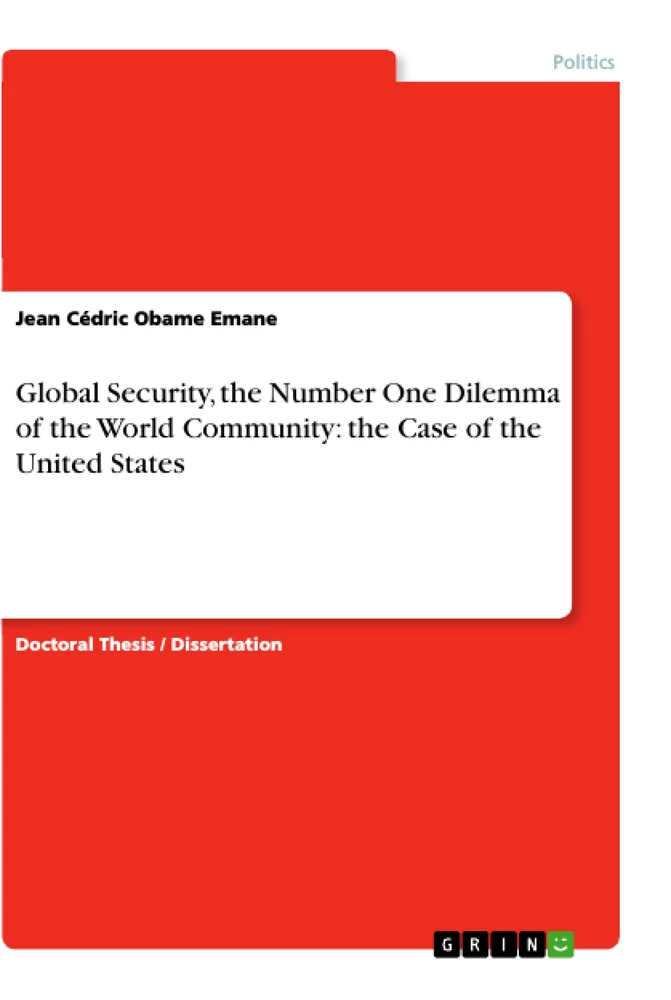
Table of Contents
1. Introduction
PART I: ARMAMENT AND DISARMAMENT
1. Armament and Disarmament in the 20th and 21st Centuries
1.1 World Military Expenditure and Nuclear Armament
1.2 Early Approaches to Disarmament and Humanitarian Law of War
1.3 Practical Obstacles to Nuclear Disarmament
2. Nuclear Security
2.1 Weapons of Mass Destruction and International Law
2.2 Nuclear Terrorism: Fighting and Identifying the Threat
2.3 Between Intergovernmental Cooperation and Catastrophe
2.4 Japan’s Self Defense: the Issue of Nuclear Breakout
PART II: ENVIRONMENTAL SECURITY
3. Environmental Threats to Human Security
3.1 The Rise of Environmental Issues in Global Politics
3.2 Environmental Issues as Threats to Security and Reasons for Environmental Problems
3.3 Assessing Environmental Security
3.4 Global Environmental Change and Human Security
4. Natural Threats to Human Security
4.1 Natural Catastrophes, Population Pressures and Demand for Resources
4.2 Water Shortage and Global Water Problems
5. Fragmentation of International Environmental Law and the Synergy
5.1 Ad Hoc Approach to the Creation of MEAs and their Outcomes
5.2 The Longstanding Fragmented Chemical Regulation Regime
5.3 The Synergy Approach to MEAs
5.4 Creating the Synergy
5.5 The Synergy: the Solution to Fragmentation
PART III: Security Threats to States and Regional Security
6. Securitization
6.1 The Concept of Security
6.2 Broad and Restricted Conceptualization of Security
6.3 The Expanding of Security
7. Military Threats to Security from States
7.1 Ideological Geopolitics (the Cold War) and the New World Order
7.2 Collective Security
8. Nonviable States, a Major Root of Conflict Today
8.1 Microstates and the Issue of Non-viability
8.2 Socioeconomic Viability
8.3 Military Viability
8.4 Political Viability
9. Regional Security
9.1 Regionalism: Historical Overview
9.2 The Current Challenges of Regionalism
9.3 Constructing Regionalism
9.4 The Complexities of Regionalism and Typology of Regionalism
9.5 The Political and Legal Dimensions of Regional Security
PART IV: Military Strategies and Terrorism
10. A Brief Overview of Military Strategy
10.1 Strategic Principles of Fighting
10.2 Tactical Maneuvers
10.3 Initial Strategy and Tactics
10.4 The Development of Modern Warfighting
11. The Five Basic Military Strategies
11.1 The Strategy of Extermination
11.2 The Strategy of Exhaustion
11.3 The Strategy of Annihilation
11.4 The Strategy of Intimidation
11.5 The Strategy of Decapitation
12. Military Threats from Terrorists
12.1 The Increase of Political Non-State Violence in the World
12.2 State-Supported Terrorism
12.3 Non-State Radical Violence without Sponsorship and Non-State Military Groups
13. State Responses to Military Threats from Non-State Actors
13.1 Appeasement, Zero Tolerance, Containment and Diplomatic Measures
13.2 Intergovernmental Collaboration and International Responses to Radical Non-State Violence
13.3 Counterterrorism and Its Limitations
PART V: Peace and Conflict Resolution
14. An Alternative System to War
14.1 The Need for an Alternative System and the Impact of War on the Environment
14.2 Common Security and the Withdrawal of Military Bases
14.3 Dismantlement of Military Alliances and Reinforcement of Global Institutions
15. Building a Culture of Peace
15.1 The Reformation of the United Nations Security Council
15.2 Exposing Old Myths about War
15.3 Peace Journalism and Peace Education
16. Reasons for War
16.1 Poverty and Conflict
16.2 Grievance and Weak States
16.3 The Decrease of Interstate War
17. Strategies for International Conflict Resolution
17.1 Third Party Roles
17.2 Partisan Roles
17.3 Economic Sanctions
17.4 Prevention and Early Warnings
17.5 Negotiation
18. Peace Process and the Spoiler Issue
18.1 Types of Spoilers
18.2 Strategies for Spoilers Management
Research Objectives and Themes
This doctoral thesis seeks to deconstruct the traditional, military-centric concept of global security by demonstrating that it must be broadened to include human security, environmental issues, and the socio-economic viability of states. The research aims to evaluate the role of the global community in addressing these diverse challenges in the era post-Cold War, with a specific focus on the United States' international relationships.
- The evolution of the concept of security from national/military-focused to human-centric.
- The role of the world community in addressing non-state military actors and terrorism.
- The securitization of environmental threats, including climate change and resource scarcity.
- The challenges of nuclear disarmament and the limitations of current non-proliferation treaties.
- The assessment of state viability and the link between weak states and global conflict.
Excerpt from the Book
The Traditional Concepts of Security
The traditional concepts of security are limited. In other words, traditional, that is, military-directed approaches to security are not always appropriate to the international challenges to come (HBFROEA, 2006). The writers underlined the following reasons to explain as to why this conceptualization of security has to be reconsidered:
Weapons do not automatically bring security. This is true for confrontational states armed with weaponries of such destructive power that no defense is possible. It is true in civil wars, where the informal accessibility of weapons empowers the merciless but offers little defense for noncombatants;
And it was true on 9/11, when a determined group of terrorists hit with impunity against the world’s most militarily powerful nation. Proliferation of weapons and military expertise is being recognized as a growing concern for international security;
Factual security in a globalizing world cannot be provided on a purely national basis (or even on the basis of partial alliances). A polygonal and even comprehensive approach is needed to deal efficiently with a multitude of transboundary challenges;
The traditional emphasis on state (or regime) security is inappropriate and needs to include protection and well-being of the state’s population. If people and communities are insecure, state security itself can be extremely jeopardized. Security without justice will not produce a stable peace. Democratic governance and a vibrant civil society may eventually be more important for security than an army;
Non-military dimensions have an important impact on security and stability. Nations around the world, but particularly the weakest countries and communities, face a multitude of pressures. They face an incapacitating combination of rising race for resources, severe environmental degradation, the reappearance of infectious diseases, poverty and growing wealth discrepancies, demographic pressures, and unemployment and income insecurity.
The major security challenges of today cannot be addressed with traditional military-focused security policies (HBFROEA, 2006).
Summary of Chapters
INTRODUCTION: The introduction establishes the necessity of redefining global security beyond military threats, emphasizing human security and the roles of international organizations.
1. ARMAMENT AND DISARMAMENT IN THE 20TH AND 21ST CENTURIES: This chapter analyzes global military expenditure and historical failures of arms control, setting the context for the current nuclear era.
2. NUCLEAR SECURITY: The chapter explores the dangers of weapons of mass destruction, the emergence of nuclear terrorism, and the specific case of Japan's nuclear stance.
3. ENVIRONMENTAL THREATS TO HUMAN SECURITY: This section discusses the rise of environmental politics, the securitization of environmental problems, and their impact on global peace.
4. NATURAL THREATS TO HUMAN SECURITY: It addresses how natural catastrophes, population pressures, and water shortages act as catalysts for conflict.
5. FRAGMENTATION OF INTERNATIONAL ENVIRONMENTAL LAW AND THE SYNERGY: The author evaluates the inefficiency of fragmented environmental law and proposes the "Synergy" model as a pragmatic solution.
6. SECURITIZATION: This chapter deepens the theoretical understanding of what constitutes a security threat, contrasting broad and restricted conceptualizations.
7. MILITARY THREATS TO SECURITY FROM STATES: It covers ideological geopolitics of the Cold War and the subsequent efforts toward collective security.
8. NONVIABLE STATES, A MAJOR ROOT OF CONFLICT TODAY: The author defines state non-viability across socio-economic, military, and political dimensions as a primary driver of modern instability.
9. REGIONAL SECURITY: This chapter investigates the challenges of regionalism and the complex interplay between regional organizations and the UN Security Council.
Keywords
Global Security, Human Security, Nuclear Disarmament, Environmental Security, Terrorism, Non-State Actors, Collective Security, State Viability, Conflict Resolution, Geopolitics, Non-Proliferation Treaty, Sustainability, Regionalism, Military Strategy, Peacebuilding.
Frequently Asked Questions
What is the core argument of this thesis?
The thesis argues that the traditional military-focused definition of security is inadequate for contemporary global challenges. It advocates for an expanded conceptualization that includes human, environmental, and socio-economic dimensions.
Which fields does the author identify as crucial for modern security?
The author identifies political, military, economic, societal, and environmental sectors as essential to a comprehensive security agenda.
How is global security linked to environmental change?
The work posits that environmental degradation, such as climate change, desertification, and resource scarcity, directly threatens human life and stability, thus acting as a significant source of modern insecurity.
What scientific approach does the author employ?
The thesis utilizes an historical approach combined with elements of postmodern theory to analyze the evolution of power and global problems from the 1970s to the present.
What is the author's stance on non-state military actors?
The author contends that non-state military groups, including terrorists, have emerged as significant, though non-traditional, actors in international affairs that require a rethink of security and legal doctrines.
What are the primary keys used to define a security threat?
The author references Ullman (1983), defining a threat as an event that drastically degrades the quality of life for a population or significantly narrows the range of policy choices available to a government.
How does the author characterize the 'Synergy' in environmental law?
The Synergy is presented as a pragmatic administrative consolidation of disparate chemical conventions to reduce costs and increase efficacy in international environmental regulation.
What specific concerns does the thesis raise regarding Japan's nuclear potential?
The thesis discusses Japan's "nuclear hedge," noting that while Japan maintains a non-nuclear policy, its advanced technical capabilities and regional security concerns (China, North Korea) keep the debate over a potential nuclear breakout relevant.
Ende der Leseprobe aus 333 Seiten
- nach oben
- Arbeit zitieren
- Jean Cédric Obame Emane (Autor:in), 2018, Global Security, the Number One Dilemma of the World Community: the Case of the United States, München, Page::Imprint:: GRINVerlagOHG, https://www.diplomarbeiten24.de/document/387541

neugierig - aktuell - relevant
Entdecken Sie hilfreiche Tipps und Tricks rund ums Studium!

Entdecken Sie hilfreiche Tipps und Tricks rund ums Studium!
Ihre Hausarbeit / Abschlussarbeit:

- - Publikation als E-Book und Buch
- - Hohes Honorar auf die Verkäufe
- - Für Sie komplett kostenlos - mit ISBN
- - Es dauert nur 5 Minuten
- - Jede Arbeit findet Leser

- © GRIN Publishing GmbH.
- Alle Inhalte urheberrechtlich geschützt. Kopieren und verbreiten untersagt.
- info@grin.com
- AGB
- Open Publishing
Der GRIN Verlag hat sich seit 1998 auf die Veröffentlichung akademischer eBooks und Bücher spezialisiert. Der GRIN Verlag steht damit als erstes Unternehmen für User Generated Quality Content. Die Verlagsseiten GRIN.com, Hausarbeiten.de und Diplomarbeiten24 bieten für Hochschullehrer, Absolventen und Studenten die ideale Plattform, wissenschaftliche Texte wie Hausarbeiten, Referate, Bachelorarbeiten, Masterarbeiten, Diplomarbeiten, Dissertationen und wissenschaftliche Aufsätze einem breiten Publikum zu präsentieren.
Kostenfreie Veröffentlichung: Hausarbeit, Bachelorarbeit, Diplomarbeit, Dissertation, Masterarbeit, Interpretation oder Referat jetzt veröffentlichen!
Folgen Sie GRIN auf


- GRIN Verlag GmbH
-
- Nymphenburger Str. 86
- 80636
- Munich, Deutschland
- +49 89-550559-0
- +49 89-550559-10
- info@grin.com
-
