
präsentiert von

Inhaltsverzeichnis (Table of Contents)
- CHAPTER I
- Introduction
- In Search of a Development Theory
- CHAPTER II
- Factors Influencing a Country's Ability to Develop
- Introducing Better Conflict-Prevention Strategies
- The Impact of Culture on Development
- Eliminating Corruption
- Actively Fighting HIV/AIDS
- Is International Trade the Answer to Alleviating World Poverty?
- Factors Influencing a Country's Ability to Develop
- CHAPTER III
- Size and Distribution of Foreign Aid
- Bilateral Aid
- Multilateral Aid
- The UN System
- The World Bank
- The EU
- Size and Distribution of Foreign Aid
- CHAPTER IV
- The Determinants of Successful Development Cooperation
- The Call for a Comprehensive Debt Relief Strategy
- What do Poor People need the Most?
- Scrutinizing Democracy and Human Rights as a Prerequisite for Development
- The Role of NGOs in Development Cooperation
- Strengthening the UN Millennium Development Goals (UNMDG)
- The Determinants of Successful Development Cooperation
Zielsetzung und Themenschwerpunkte (Objectives and Key Themes)
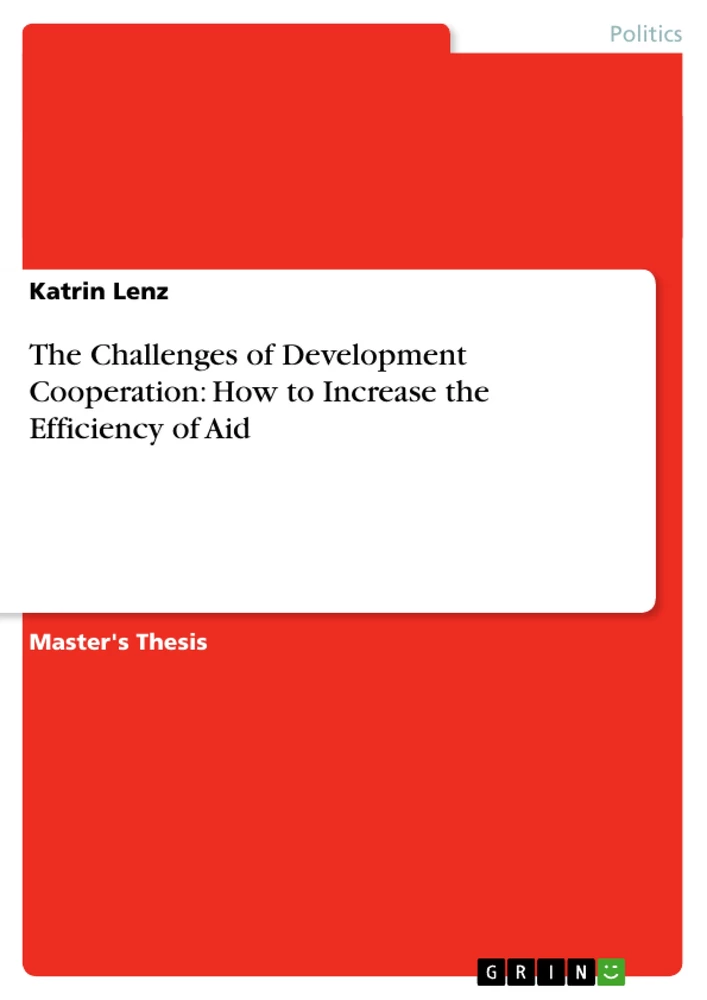
This thesis aims to identify key areas where development cooperation needs to focus in order to be effective. It advocates for a global development strategy as the most efficient way to pool capital and expertise. Through a detailed analysis of the size and distribution of development cooperation, the thesis argues that its inefficiency, rather than its insufficiency, is the main obstacle to success. To provide developing countries with a solid foundation for growth, the thesis proposes several key actions, including addressing debt burdens, strengthening the UN Millennium Development Goals, streamlining the number of international organizations involved, focusing on specific areas, and prioritizing the needs of the poor.
- The need for a global development strategy to improve the efficiency of development cooperation.
- The impact of debt burdens on developing countries and the importance of debt relief strategies.
- The crucial role of the UN Millennium Development Goals in global development efforts.
- The challenges posed by a complex network of international organizations involved in development cooperation.
- The importance of focusing on specific development areas rather than attempting to address all problems simultaneously.
Zusammenfassung der Kapitel (Chapter Summaries)
- Chapter I introduces the topic of development cooperation and explores various theories and approaches to development. It examines the evolution of development cooperation, highlighting the challenges and complexities associated with achieving sustainable development.
- Chapter II delves into the factors that influence a country's ability to develop. It discusses the impact of conflict, cultural factors, corruption, HIV/AIDS, and international trade on development outcomes. This chapter presents a multidimensional perspective on development challenges.
- Chapter III analyzes the size and distribution of foreign aid. It explores both bilateral and multilateral aid flows, examining the roles of different international organizations such as the UN System, the World Bank, and the EU. This chapter provides a detailed overview of the current landscape of development assistance.
- Chapter IV investigates the determinants of successful development cooperation. It examines the need for debt relief, emphasizes the importance of understanding the needs of the poor, critiques the use of democracy and human rights as prerequisites for development, explores the role of NGOs, and argues for strengthening the UN Millennium Development Goals.
Schlüsselwörter (Keywords)
The key concepts explored in this thesis include development cooperation, global development strategy, poverty reduction, debt relief, UN Millennium Development Goals, international organizations, NGOs, democracy, human rights, and international trade. The work emphasizes the need for a coordinated and effective approach to development cooperation to address the challenges of poverty and inequality.
Frequently Asked Questions
What is development cooperation?
It is an effort to assist nation states and institutions to grow out of poverty through the transfer of money, knowledge, and resources in areas like infrastructure and health care.
How did the Marshall Plan influence modern foreign aid?
The success of the Marshall Plan in Europe led the US to apply similar concepts globally, initially to counter communism and later to reduce poverty.
What are the main motives behind donor countries' aid?
Motives vary: the US often focuses on national security, France and Great Britain on commercial interests, while Scandinavian countries prioritize humanitarian goals.
What are the UN Millennium Development Goals (UNMDG)?
They are a set of global targets aimed at reducing poverty and improving health and education, which the thesis argues should be strengthened for better efficiency.
Why is current development aid often considered inefficient?
The thesis suggests inefficiency stems from a complex network of organizations, lack of coordination, and strategies that don't always prioritize the actual needs of the poor.
What role do NGOs play in development cooperation?
NGOs are explored in Chapter IV as significant actors that can influence the success and implementation of development strategies on the ground.
Ende der Leseprobe aus 124 Seiten
- nach oben
- Arbeit zitieren
- Katrin Lenz (Autor:in), 2004, The Challenges of Development Cooperation: How to Increase the Efficiency of Aid, München, Page::Imprint:: GRINVerlagOHG, https://www.diplomarbeiten24.de/document/43599

neugierig - aktuell - relevant
Entdecken Sie hilfreiche Tipps und Tricks rund ums Studium!

Entdecken Sie hilfreiche Tipps und Tricks rund ums Studium!
Ihre Hausarbeit / Abschlussarbeit:

- - Publikation als E-Book und Buch
- - Hohes Honorar auf die Verkäufe
- - Für Sie komplett kostenlos - mit ISBN
- - Es dauert nur 5 Minuten
- - Jede Arbeit findet Leser

- © GRIN Publishing GmbH.
- Alle Inhalte urheberrechtlich geschützt. Kopieren und verbreiten untersagt.
- info@grin.com
- AGB
- Open Publishing
Der GRIN Verlag hat sich seit 1998 auf die Veröffentlichung akademischer eBooks und Bücher spezialisiert. Der GRIN Verlag steht damit als erstes Unternehmen für User Generated Quality Content. Die Verlagsseiten GRIN.com, Hausarbeiten.de und Diplomarbeiten24 bieten für Hochschullehrer, Absolventen und Studenten die ideale Plattform, wissenschaftliche Texte wie Hausarbeiten, Referate, Bachelorarbeiten, Masterarbeiten, Diplomarbeiten, Dissertationen und wissenschaftliche Aufsätze einem breiten Publikum zu präsentieren.
Kostenfreie Veröffentlichung: Hausarbeit, Bachelorarbeit, Diplomarbeit, Dissertation, Masterarbeit, Interpretation oder Referat jetzt veröffentlichen!
Folgen Sie GRIN auf


- GRIN Verlag GmbH
-
- Nymphenburger Str. 86
- 80636
- Munich, Deutschland
- +49 89-550559-0
- +49 89-550559-10
- info@grin.com
-
