
präsentiert von

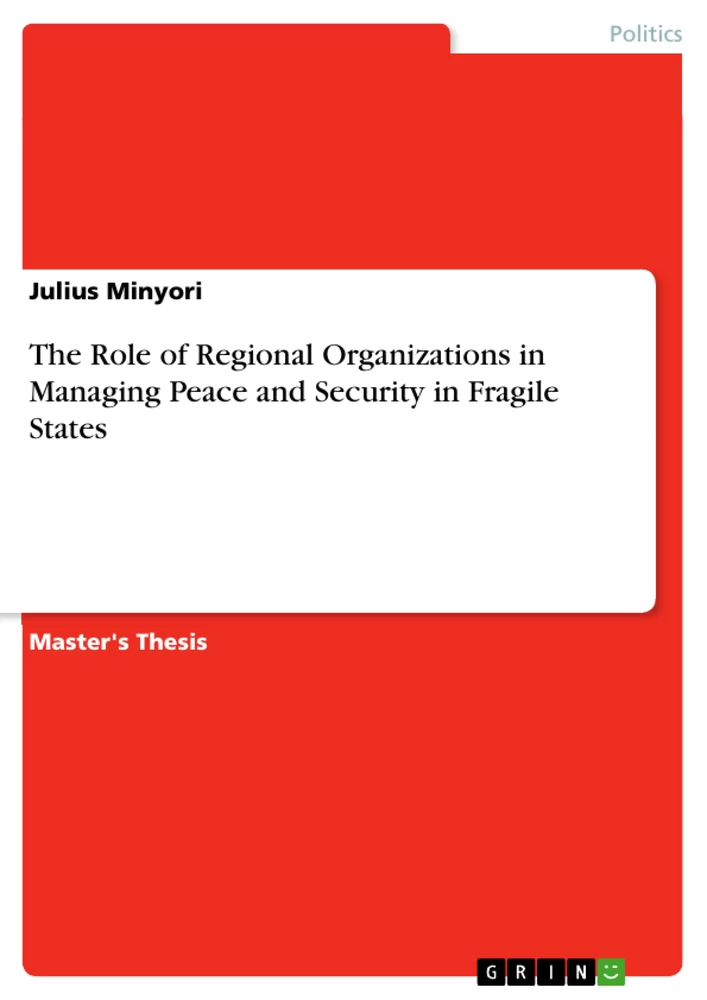
Table of Contents
1.0 Background
1.1 Research Aim
1.2 Research Question
1.3 Research Objectives
1.4 Research Methodology
1.5 Theoretical Framework
1.6 Hypotheses
1.7 Limitations
1.8 Ethical Considerations
2.0 Introduction
2.1 State Fragility and Peace building in Africa.
2.2 Governance and Security in Fragile states
2.3 Patrimonialism and security in Africa
2.4 Ethnicity in South Sudan
2.5 Security Threats
2.6 Institutional Conflict Management
2.7 Mediation and Negotiation
2.8 Strategic Management
3.1 Research Methodology
3.2 Research Design
3.3 Methods of Data Collection
3.4 Sampling Procedure
3.5 Data Analysis and Interpretation
4.1 IGADs Involvement in Regional Security
4.2 Resurgence of Conflict in South Sudan
4.3 IGAD’s Intervention in Sudan
4.4 New Conflict, New Initiative
4.5 The Cessation of Hostilities Agreement
4.6 Mediation and Negotiations Process in IGAD
4.7 The Agreement on the Resolution of the conflict in South Sudan
4.8 Successes and Failures
5.1. Recommendations
Research Objectives & Topics
This research aims to investigate the effectiveness of the Intergovernmental Authority on Development (IGAD) in managing regional conflicts, specifically through the case study of its interventions in the South Sudan conflict, to determine if regional organizations should lead peace and security management in their member states.
- Evaluation of IGAD's effectiveness in conflict resolution.
- Analysis of regional political dynamics impacting peace efforts.
- Assessment of IGAD's capacity and political will to manage the South Sudan crisis.
- Application of neoliberal institutionalism theory to regional peace interventions.
- Exploration of the impact of state fragility and governance on regional stability.
Excerpt from the Book
4.2 Resurgence of Conflict in South Sudan
The end of the cold war in 1991 was expected to usher in an era of peace and stability like never before. Large-scale violent conflicts and proxy wars pitting clients of the then super powers against each other had characterized the cold war period. A sudden spike in the number of interstate conflicts was noticed in the 1990s especially in Africa, where the hitherto protected client states found themselves without the protection of the sponsor super power. In Africa conflicts picked in Somalia, Sierra Leone, Rwanda and Sudan. Except for the war in the Sudan, all the other conflicts were internal and intrastate (Irit Back 2016). Conflicts also occurred in the Balkans and South East Asia in Timor where the Timorese waged a war of self-determination against the Indonesian authorities (Back, Ibid). However the worst cases of conflict occurred in the African continent where genocide took place in Rwanda while other conflicts across the continent produced large numbers of refugees and internally displaced people (IDPs). Whereas other regional organizations intervened in the management of conflicts within their areas of jurisdiction with varying results, the case of South Sudan remains illustrative because as indicated above, the advent of independence and the birth of a new state on the African continent had a lot of promise, a promise that was nonetheless not forthcoming.
Summary of Chapters
1.0 Background: Provides the global context of post-Cold War intrastate conflicts and introduces the role of regional organizations in African peace and security.
Chapter Two: Literature Review: Reviews academic literature on state fragility, governance, patrimonialism, and the application of neoliberal institutionalism in analyzing conflict.
Chapter Three: Details the qualitative research methodology, including the case study design, purposive sampling, and data collection methods utilized for the study.
Chapter Four: Examines IGAD's history in regional security, its specific interventions in Sudan and South Sudan, and the challenges faced during the mediation of the South Sudan conflict.
Chapter Five: Concludes that IGAD has experienced more failures than successes and offers recommendations for a more effective approach to regional conflict management.
Keywords
IGAD, South Sudan, Conflict Management, Peacebuilding, Regional Organizations, State Fragility, Mediation, Neoliberal Institutionalism, Sudan Civil War, ARCSS, Political Dynamics, Subsidiarity, Security Threats, Diplomacy, Governance
Frequently Asked Questions
What is the primary focus of this research?
The research primarily focuses on assessing the effectiveness of the Intergovernmental Authority on Development (IGAD) as a regional organization in managing peace and security, specifically addressing the South Sudan conflict.
What are the central themes discussed in the work?
The central themes include state fragility in Africa, the role of regional organizations in conflict resolution, the impact of political dynamics on mediation, and the challenges of implementing peace agreements in fragile states.
What is the main research question of the study?
The central research question asks: How effective has IGAD been in its management of the South Sudan conflict?
Which scientific methodology is employed in this research?
The study employs a qualitative research methodology, utilizing a case study research design, document analysis, and insights from personal observations by the author who worked as a liaison officer for IGAD and the AU.
What topics are covered in the main body of the paper?
The main body covers the literature review on state fragility and governance, the historical context of conflicts in Sudan and South Sudan, an analysis of IGAD's mediation processes, and an evaluation of the successes and failures of the Agreement on the Resolution of the Conflict in South Sudan (ARCSS).
Which key concepts characterize this work?
The work is characterized by concepts such as regionalism, neoliberal institutionalism, patrimonialism, the principle of subsidiarity, and the nuances of diplomatic intervention in ethnically driven conflicts.
Why did IGAD's mediation in South Sudan face significant challenges?
The research suggests that challenges arose due to a lack of coherent strategy, the pursuit of individual member states' national interests (particularly Ethiopia's), failure to understand deep-seated cultural and ethnic dynamics, and the imposition of external models that were ill-suited for the South Sudan context.
How did the author define the role of IGAD compared to other regional bodies?
The author contrasts IGAD's proactive, though often struggling, approach with the experiences of other regional bodies like ECOWAS, noting that while IGAD has mediation experience, it remains hampered by financial dependency and internal political agendas.
Ende der Leseprobe aus 68 Seiten
- nach oben
- Arbeit zitieren
- Julius Minyori (Autor:in), 2018, The Role of Regional Organizations in Managing Peace and Security in Fragile States, München, Page::Imprint:: GRINVerlagOHG, https://www.diplomarbeiten24.de/document/446833

neugierig - aktuell - relevant
Entdecken Sie hilfreiche Tipps und Tricks rund ums Studium!

Entdecken Sie hilfreiche Tipps und Tricks rund ums Studium!
Ihre Hausarbeit / Abschlussarbeit:

- - Publikation als E-Book und Buch
- - Hohes Honorar auf die Verkäufe
- - Für Sie komplett kostenlos - mit ISBN
- - Es dauert nur 5 Minuten
- - Jede Arbeit findet Leser

- © GRIN Publishing GmbH.
- Alle Inhalte urheberrechtlich geschützt. Kopieren und verbreiten untersagt.
- info@grin.com
- AGB
- Open Publishing
Der GRIN Verlag hat sich seit 1998 auf die Veröffentlichung akademischer eBooks und Bücher spezialisiert. Der GRIN Verlag steht damit als erstes Unternehmen für User Generated Quality Content. Die Verlagsseiten GRIN.com, Hausarbeiten.de und Diplomarbeiten24 bieten für Hochschullehrer, Absolventen und Studenten die ideale Plattform, wissenschaftliche Texte wie Hausarbeiten, Referate, Bachelorarbeiten, Masterarbeiten, Diplomarbeiten, Dissertationen und wissenschaftliche Aufsätze einem breiten Publikum zu präsentieren.
Kostenfreie Veröffentlichung: Hausarbeit, Bachelorarbeit, Diplomarbeit, Dissertation, Masterarbeit, Interpretation oder Referat jetzt veröffentlichen!
Folgen Sie GRIN auf


- GRIN Verlag GmbH
-
- Nymphenburger Str. 86
- 80636
- Munich, Deutschland
- +49 89-550559-0
- +49 89-550559-10
- info@grin.com
-
