
präsentiert von

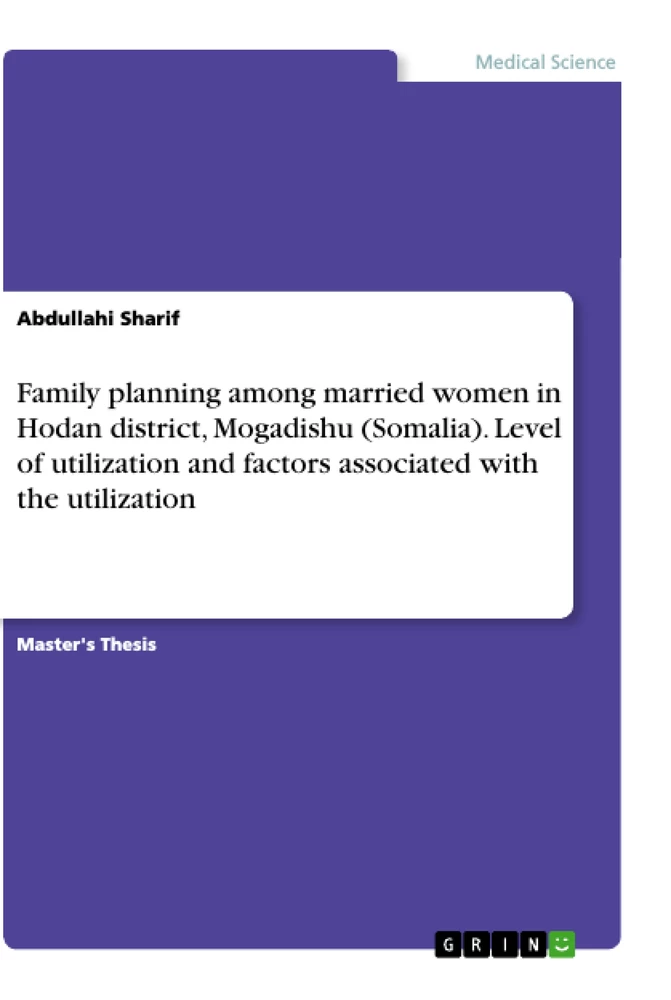
Table of Contents
CHAPTER ONE: INTRODUCTION
1.2 Statement of the problem
1.3. General objective of the study
1.4 Specific objectives
1.5. Research questions
1.6 Significance of the study
1.7 scope of the study
1.8 Operational Definition
1.9 Conceptual framework
CHAPTER TWO: BACKGROUND
CHAPTER THREE: LIT ERATURE REVIEW
3.0 INTRODUCTION
3.1 HEALTH SYSTEM FACTORS AND UTILIZATION OF FAMILY PLANNING SERVICES
3.1.1 Availability of family planning services
3.1.2 Quality of family planning services offered
3 .1.3 Integration of family planning services with other services
3.2 CULTURAL FACTORS AND UTILIZATION OF FAMILY PLANNING SERVICES
3.2.1 Spouse refusal and effect on FP use
3.2.2 Influence of culture disapproval on FP use
3.3 SOCIO-DEMOGRPHIC FACTORS AND UTILIZATION OF FAMILY PLANNING SERVICES
3.3.1 Education level and FP use
3.3.2 Knowledge about FP methods and FP use
3.3.3 Age and FP use
3.4 Summary
CHAPTER FOUR: METHODOLOGY
4.0 Introduction
4.1 Research Design
4.2 Study area
4.3 Target population
4.4 Sample Size
4.5 Sampling Procedure
4.6 Exclusion and Inclusion Criteria
4.6.1 Inclusion Criteria
4.6.2 Exclusion Criteria
4.7 Study Variables
4.8 Data collection methods and instruments
4.9 Validity and Reliability of the study instruments
4.9.1 Validity
4.10 Data Gathering Procedures
4.11 Data processing and analysis
4.12 Ethical consideration
4.13 Limitations
CHAPTER FIVE: RESULTS
5.0 Introduction
5.1 Demographic characteristics of the respondents
5.2 Prevalence of family planning services
5.3 Health System Factors
5.4 Cultural factors
Table 4.5.1 Demographic characteristics associated with the level of utilization family planning services
Table 4.5.2 Demographic characteristics associated with the level of utilization family planning services
Table 4.6 Cultural factors associated with the level of utilization of family
Table 4.6 Cultural factors associated with the level of utilization of family
5.1 Health system factors associated with the level of utilization of family planning services
CHAPTER SIX: DISCUSSION
6.1 Discussion
CHAPTER SEVEN: CONCLUSION AND RECOMENDATION
7.1 Conclusion
7.2 Recommendation
Research Objectives and Key Topics
The primary objective of this study is to assess the level of utilization and identify the key factors—including health system, cultural, and socio-demographic variables—that influence the use of family planning services among married women of reproductive age (15-49 years) in the Hodan District of Mogadishu, Somalia.
- Health system factors affecting access and utilization of family planning services.
- Cultural barriers and societal perceptions regarding modern contraceptive use.
- Impact of socio-demographic characteristics such as education and knowledge on family planning uptake.
- The role of spousal approval and decision-making in contraceptive adoption.
- Strategies for improving maternal and child health through increased contraceptive prevalence.
Excerpt from the Book
1.2 Statement of the problem
The use of family planning contraceptives protects the mother by preventing the risk factors that contribute maternal mortality and morbidity, by simply providing contraceptives to the eligible women. One of the targets of the Somali ministry of health with respect to improving maternal and child health is to increase the contraceptive prevalence rate 66% by the year 2015 (Unicef, 2009).
In order to achieve this target, the Ministry has given priority to the provision of family planning services in the community. Although east Africa is a region with increasing utilization of family planning methods among married of fertile age, yet, utilization of family planning services among married women in Somalia is still more Challenging. Somalia is the lowest for contraceptive utilization among other countries of the region due to various factors which need to be scientifically investigated (Federal Ministry of Health, 2011).
Therefore, this study seeks to assess utilization and the factors associated among the married women of reproductive age (15-49) in Hodan District Mogadishu- Somalia.
Summary of Chapters
CHAPTER ONE: INTRODUCTION: This chapter outlines the global and regional context of reproductive health, presents the research problem in Somalia, and defines the core research objectives and questions.
CHAPTER TWO: BACKGROUND: This section provides a contextual overview of family planning prevalence, fertility rates, and maternal health challenges, specifically focusing on data from developing regions and Somalia.
CHAPTER THREE: LIT ERATURE REVIEW: This chapter synthesizes existing academic literature concerning health system factors, cultural influences, and socio-demographic predictors of family planning utilization.
CHAPTER FOUR: METHODOLOGY: This section details the research design, target population, sampling procedures, and data collection tools used to conduct the study in the Hodan District.
CHAPTER FIVE: RESULTS: This chapter presents the statistical findings of the survey, categorized by demographic characteristics, family planning prevalence, and health system/cultural factors.
CHAPTER SIX: DISCUSSION: This chapter interprets the study results in relation to previous research findings, discussing the significance of education, spousal approval, and healthcare access.
CHAPTER SEVEN: CONCLUSION AND RECOMENDATION: This final chapter synthesizes the main findings and provides evidence-based recommendations for policy makers, religious leaders, and healthcare providers to improve family planning uptake.
Key Keywords
Family Planning, Reproductive Health, Maternal Mortality, Contraceptive Prevalence, Hodan District, Somalia, Health System Factors, Cultural Barriers, Socio-Demographic Factors, Fertility Rate, Contraceptive Methods, Spousal Approval, Public Health, Women’s Health, Reproductive Age.
Frequently Asked Questions
What is the core focus of this research?
The research focuses on assessing the utilization of family planning services among currently married women of reproductive age in the Hodan District of Mogadishu, Somalia, and identifying the factors that influence this utilization.
What are the primary thematic fields covered?
The themes include health system factors (availability and quality of services), cultural factors (spousal influence and social disapproval), and socio-demographic factors (education level and parity).
What is the primary goal of the study?
The primary goal is to provide empirical evidence on the barriers and drivers of family planning in Hodan District to help guide local policy and healthcare interventions aimed at reducing maternal mortality.
Which methodology was employed?
A community-based cross-sectional study design was used, utilizing quantitative data collected from 228 married women via face-to-face interviews with a structured questionnaire.
What is covered in the main body of the work?
The main body reviews existing literature on contraceptive usage, details the rigorous methodology for data collection in a challenging environment, and presents the statistical results of how factors like education and distance to clinics correlate with contraceptive use.
Which keywords characterize the work?
Key terms include family planning, maternal mortality, contraceptive prevalence, reproductive age, Hodan District, cultural factors, and health systems.
Why is Somali culture considered a key variable in this study?
The study identifies Somali culture as a significant determinant, as cultural norms and social expectations often influence the perceived acceptability of modern contraceptive methods and spousal decision-making processes.
What specific findings were linked to clinic access?
The results highlight that factors such as proximity to a health facility (distance) and waiting times at clinics are statistically significant predictors of whether or not a woman chooses to utilize family planning services.
Ende der Leseprobe aus 76 Seiten
- nach oben
- Arbeit zitieren
- Abdullahi Sharif (Autor:in), 2019, Family planning among married women in Hodan district, Mogadishu (Somalia). Level of utilization and factors associated with the utilization, München, Page::Imprint:: GRINVerlagOHG, https://www.diplomarbeiten24.de/document/502232

neugierig - aktuell - relevant
Entdecken Sie hilfreiche Tipps und Tricks rund ums Studium!

Entdecken Sie hilfreiche Tipps und Tricks rund ums Studium!
Ihre Hausarbeit / Abschlussarbeit:

- - Publikation als E-Book und Buch
- - Hohes Honorar auf die Verkäufe
- - Für Sie komplett kostenlos - mit ISBN
- - Es dauert nur 5 Minuten
- - Jede Arbeit findet Leser

- © GRIN Publishing GmbH.
- Alle Inhalte urheberrechtlich geschützt. Kopieren und verbreiten untersagt.
- info@grin.com
- AGB
- Open Publishing
Der GRIN Verlag hat sich seit 1998 auf die Veröffentlichung akademischer eBooks und Bücher spezialisiert. Der GRIN Verlag steht damit als erstes Unternehmen für User Generated Quality Content. Die Verlagsseiten GRIN.com, Hausarbeiten.de und Diplomarbeiten24 bieten für Hochschullehrer, Absolventen und Studenten die ideale Plattform, wissenschaftliche Texte wie Hausarbeiten, Referate, Bachelorarbeiten, Masterarbeiten, Diplomarbeiten, Dissertationen und wissenschaftliche Aufsätze einem breiten Publikum zu präsentieren.
Kostenfreie Veröffentlichung: Hausarbeit, Bachelorarbeit, Diplomarbeit, Dissertation, Masterarbeit, Interpretation oder Referat jetzt veröffentlichen!
Folgen Sie GRIN auf


- GRIN Verlag GmbH
-
- Nymphenburger Str. 86
- 80636
- Munich, Deutschland
- +49 89-550559-0
- +49 89-550559-10
- info@grin.com
-
