
präsentiert von

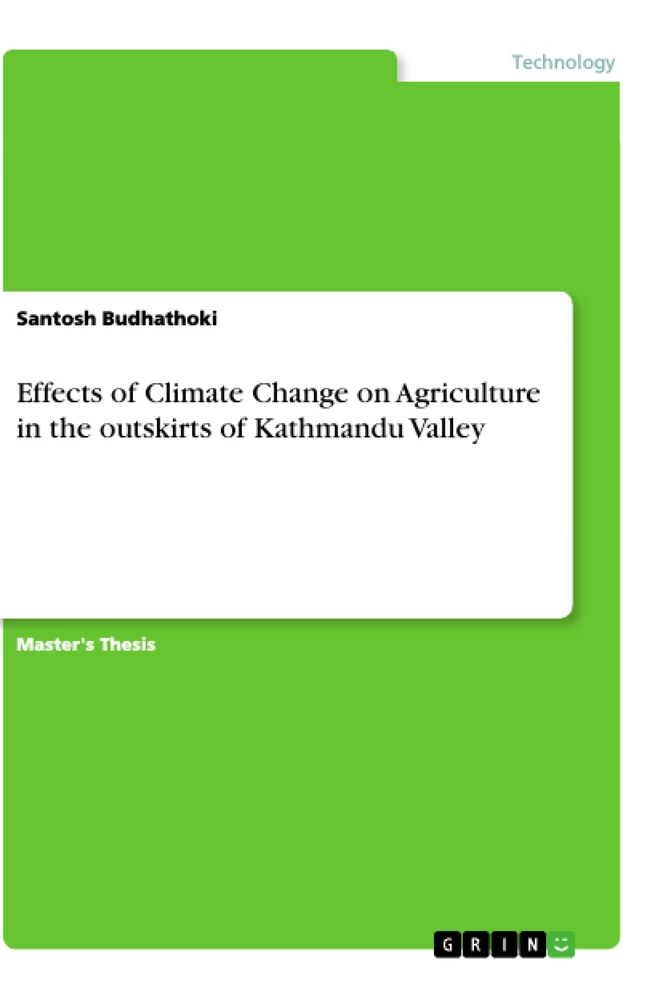
Table of Contents
1. INTRODUCTION
1.1 Background
1.2 Statement of problem
1.3 Objectives of the study
1.4 Research questions
1.5 Rationale of the study
1.6 Significance of the study
1.7 Delimitation of the study
2. LITERATURE REVIEW
2.1 Climate Change
2.2 The Greenhouse effect
2.3 Greenhouse Gases
2.4 Sulphur-dioxide
2.5 Methane
2.6 Carbon-dioxide
2.7 Carbon-monoxide (CO)
2.8 Water vapor
2.9 Oxides of nitrogen
2.10 Risk of climate change in the context of south Asia
2.11 Risk of climate change in the context of Nepal
2.12 Nepal as agricultural country
2.13 Temperature status of Nepal
2.14 The rainfall status of Nepal
3. RESEARCH METHODOLOGY
3.1 Research design
3.2 Selection of the study area
3.3 Description of the study area
3.4 Selection of samples
3.5 Sample size
3.6 Sources of data
3.7 Key informants
3.8 Methods of data collection
3.9 Key informants interview
3.10 Direct observation
3.11 Questionnaire Schedule
3.12 Group discussion
3.13 Formal and informal meetings
3.14 Procedures of data collection
4. ANALYSIS AND INTERPRETATION OF DATA
4.1 Unknown Virus destroyed the whole farm
4.2 New kind of insect devouring the tomatoes
4.3 Green Caterpillar in the corn leaves
4.4 Holes in the leaves of lady’s figure plant
4.5 Strange moth makes hole in the Bitter gourd
4.6 Zero Cucumber harvest
4.7 Invasion of the new plants and wild grass species
4.8 Barren lands
4.9 Wheat, Barley and millet are planted no more
4.10 Shifting in the crop plantation period
4.11 Paddy plantation in the dry field
4.12 Epidemic disease in paddy
4.13 Cultivation of Corn in the rice fields
4.14 Amount of agricultural harvest reduced a lot
4.15 Mitigation measures of climate change on agriculture
5. RESULTS, CONCLUSIONS AND RECOMMENDATIONS
5.1 Results
5.2 Conclusion
5.3 Recommendations
5.4 Area of further research
Research Objectives and Themes
This thesis examines the impact of climate change on agriculture in the PuranoNaikap village, located in the outskirts of the Kathmandu Valley. The research aims to understand how shifting weather patterns, such as altered rainfall and temperature fluctuations, affect crop production, agricultural practices, and local livelihoods, while also exploring potential mitigation and adaptation strategies for farmers.
- Impact of climate change on crop yield and production stability.
- Changes in traditional agricultural calendars and plantation periods.
- The emergence of new pests, diseases, and invasive plant species due to rising temperatures.
- Local farmer perceptions, adaptation strategies, and the need for policy interventions.
Auszug aus dem Buch
Unknown Virus destroyed the whole farm
During the study, it was found that the plants were being destroyed by unknown virus which was never appeared in the past. The viral diseases affected tomatoes, potato, rice and wheat plants were the major problems which had taken the form of epidemic. It had been very hard for the farmers who were fully dependent on the farmland for living. The major disease found in the wheat was “Kalopoke” in local language which is characterized by the formation of black dust around the pods of wheat. In case of potato, the disease is PMV, which is a viral disease in which leaves of the potato is dried turning black. The plant affected by the disease cannot yield fruit as it dies earlier. In rice the leaves roll into shape of a long cylinder. During the time of formation of fruit in the plant the disease affectd the plant and there was no fruit in the plant during harvest time.
In case of tomato, the virus attacked the stem of the plant during the time of pollination. As it was the time of fruiting, the plant could not produce much tomato. When the tomato grew bigger, it brought the dark spots in it which made it unfit for selling. The viral disease was so fast spreading that 200 individual plants were affected within a week. In the first day five plants were seen with the dark spot in the stem but at the end of seventh day almost 200 plants were seen with the same. The disease was uncured by the medicines used there at that time.
Summary of Chapters
INTRODUCTION: This chapter provides the background of the study, the problem statement regarding the observed decline in agricultural productivity, and the specific objectives and research questions guiding the study.
LITERATURE REVIEW: This section reviews existing knowledge on climate change, greenhouse effects, and gases, while contextualizing the risks of climate change for South Asia, Nepal, and specifically the agricultural sector.
RESEARCH METHODOLOGY: This chapter outlines the qualitative and quantitative methods used, including site selection (PuranoNaikap), sampling techniques, and data collection tools such as interviews, observations, and questionnaires.
ANALYSIS AND INTERPRETATION OF DATA: This chapter presents the empirical findings regarding the adverse effects of climate change, including viral diseases in crops, insect infestations, and shifts in cultivation patterns.
RESULTS, CONCLUSIONS AND RECOMMENDATIONS: This final chapter synthesizes the study's findings, draws conclusions about the severe impact of climate change on local agriculture, and proposes recommendations for mitigation and future research.
Keywords
Climate Change, Agriculture, Kathmandu Valley, PuranoNaikap, Global Warming, Crop Production, Viral Diseases, Pest Infestation, Adaptation, Mitigation, Rainfall Patterns, Food Security, Sustainability, Subsistence Farming, Ropani.
Frequently Asked Questions
What is the core focus of this research?
The research focuses on analyzing the detrimental impacts of climate change and global warming on agricultural productivity and practices in the peripheral areas of the Kathmandu Valley, specifically within the PuranoNaikap village.
What are the primary themes discussed in the work?
The study covers themes such as changing climate and weather patterns, the emergence of epidemic plant diseases, the impact on soil and water resources, the shift in agricultural planting calendars, and the socioeconomic challenges faced by local farmers.
What is the main objective of the thesis?
The primary objective is to identify and document the specific effects of climate change on crop production and agricultural patterns in the research area, as well as to suggest feasible mitigation and adaptation measures.
Which methodology was applied in this study?
The study employed a mixed-methods approach, combining quantitative data (yield statistics) and qualitative research (interviews, field observations, and formal/informal meetings with key stakeholders and farmers).
What topics are covered in the main body of the work?
The main body treats the identification of viral crop diseases, the arrival of invasive insect species, changes in crop viability (e.g., disappearance of certain crops), the problem of barren lands, and the adaptation of farmers to different crop varieties like corn.
Which keywords characterize this study?
The study is best described by keywords such as Climate Change, Agriculture, Nepal, Kathmandu Valley, crop yield reduction, adaptation, mitigation, and food security.
How does the study explain the emergence of new plant species in Kathmandu?
The research notes that rising temperatures in the Kathmandu Valley, caused by climate change, have created conditions similar to those in the lower-altitude Terai region, allowing tropical fruits like mango and banana to flourish at higher altitudes than previously possible.
What specific impact did the researcher observe regarding rice and maize cultivation?
The study reveals a significant reduction in yields, with rice production decreasing by 65% and maize by 50% over the last decade, largely due to unseasonal rainfall, drought, and an increase in epidemic viral diseases.
What role does the local Village Development Committee (VDC) play according to the text?
The VDC serves as a source for regional demographic and land-use data, and the researcher suggests that local governance is critical for future policy-making, land-plotting regulations, and providing support for farmers facing these environmental crises.
Ende der Leseprobe aus 112 Seiten
- nach oben
- Arbeit zitieren
- Santosh Budhathoki (Autor:in), 2016, Effects of Climate Change on Agriculture in the outskirts of Kathmandu Valley, München, Page::Imprint:: GRINVerlagOHG, https://www.diplomarbeiten24.de/document/520094

neugierig - aktuell - relevant
Entdecken Sie hilfreiche Tipps und Tricks rund ums Studium!

Entdecken Sie hilfreiche Tipps und Tricks rund ums Studium!
Ihre Hausarbeit / Abschlussarbeit:

- - Publikation als E-Book und Buch
- - Hohes Honorar auf die Verkäufe
- - Für Sie komplett kostenlos - mit ISBN
- - Es dauert nur 5 Minuten
- - Jede Arbeit findet Leser

- © GRIN Publishing GmbH.
- Alle Inhalte urheberrechtlich geschützt. Kopieren und verbreiten untersagt.
- info@grin.com
- AGB
- Open Publishing
Der GRIN Verlag hat sich seit 1998 auf die Veröffentlichung akademischer eBooks und Bücher spezialisiert. Der GRIN Verlag steht damit als erstes Unternehmen für User Generated Quality Content. Die Verlagsseiten GRIN.com, Hausarbeiten.de und Diplomarbeiten24 bieten für Hochschullehrer, Absolventen und Studenten die ideale Plattform, wissenschaftliche Texte wie Hausarbeiten, Referate, Bachelorarbeiten, Masterarbeiten, Diplomarbeiten, Dissertationen und wissenschaftliche Aufsätze einem breiten Publikum zu präsentieren.
Kostenfreie Veröffentlichung: Hausarbeit, Bachelorarbeit, Diplomarbeit, Dissertation, Masterarbeit, Interpretation oder Referat jetzt veröffentlichen!
Folgen Sie GRIN auf


- GRIN Verlag GmbH
-
- Nymphenburger Str. 86
- 80636
- Munich, Deutschland
- +49 89-550559-0
- +49 89-550559-10
- info@grin.com
-
